 The AI-Native MSP That Takes You From Strategy to Production Outcomes.

Gartner® Critical Capabilities for Managed Network Services
Overview
Organizations increasingly rely on managed network services to support and secure their wide-area and local-area networks. However, provider service capabilities vary widely. This research helps I&O leaders determine which provider best aligns with their service needs.
Key Findings
-
The managed network services (MNS) market is large and fragmented. Players range from traditional network service providers (NSPs) to system integrators and pure-play MNS providers, all with varying service capabilities and geographic reach.
-
MNS providers continue to invest in automating service delivery and are increasingly adopting AI technologies to enhance monitoring and incident response for higher-quality services. Competitors in this market also have upgraded their customer portalsto off er improved network visibility, incident management and customer support.
-
Managed security is becoming pervasive across LAN and WAN environments, on zero-trust network access (ZTNA) and, by extension, secure access service edge (SASE) offerings.
Recommendations
- Solicit competitive RFPs from a shortlist of three to five providers, including NSPs, pure-play network management firms, system integrators, and nontraditional suppliers, to benchmark service delivery and support levels.
- Prioritize MNS providers with advanced automation and AI-driven capabilities, as these directly enhance service quality, operational efficiency, SLA performance and first- contact resolution (FCR). Assess automation maturity and AI integration in monitoring and incident response, and request relevant performance metrics to ensure alignment with organizational objectives.
- Require all MNS providers to off er comprehensive, integrated security solutions tailored to your risk profile, compliance requirements (e.g., NIST CSF, ISO 27001, GDPR, PCI-DSS), current threat landscape, and hybrid/multicloud environments as a non-negotiable selection criterion.
Strategic Planning Assumptions
By 2030, 75% of new software-defined wide-area network (SD-WAN) purchases will be part of a SASE platform offering, a significant increase from 25% in 2025.
By 20 30, over 60% of MNS contracts will mandate end-to-end AI-driven network management, resulting in a shift from traditional SLA-based models to outcome-based, AI-driven, autonomous, intent-based operational agreements.
What You Need to Know
The MNS market focuses foundationally on network operations center (NOC) monitoring functionality , as well as network and security infrastructure life cycle services. Capabilities that we analyze in this research include providers’ service delivery platforms, service management, operations automation/AI features, and customer experience management. In addition, we assess LAN, WAN and security service management capabilities.
Critical Capabilities Use-Case Graphics


Vendors
Accenture
Accenture is headquartered in Dublin, Ireland. Gartner estimates that it manages more than 22,000 LAN, 27,000 WAN, and 27,000 managed security services (MSS) customer sites worldwide. Their largest markets are in the Americas and EU. Accenture is expandingin Asia/Pacific and Latin America, and its Asia/Pacific presence has been further strengthened through its acquisition of a cybersecurity firm, CyberCX. Accenture’s cloud-based MNS services are highly automated, leveraging proprietary platforms like Cloud Network Operator (CNO) and GenWizard AIOps platforms. This automation, supported by agentic AI, has contributed to a high FCR rate and a high zero-touch FCR rate. GenWizard is used to correlate user experience with network and security telemetry for proactive issue detection and SLA risk prediction. Accenture’s global delivery centers support more than 135 clients. While traditional MNS service models are available, Accenture’s primary offering is network as a service (NaaS). Its managed LAN services support multiple vendors, such as Cisco Meraki, Fortinet and HPE Networking (Aruba and Juniper). Accenture’s managed WAN portfolio includes SD-WAN with vendor partners, including Cisco Catalyst/Meraki, HPE Juniper Networking, Fortinet, Palo Alto Networks, Dispersive and Cato Networks. Its managed security portfolio covers firewalls, secure web gateways, and security orchestration, automation and response (SOAR). It uses a range of partners, such as Palo Alto Networks, Zscaler, Cisco, Fortinet, and Cloudflare. Over the last year, Accenture enhanced its MNS portfolio with:
-
Prioritized innovation, automation and security: The company enhanced its SD-WAN and zero-trust architecture showcases, expanding lab network capabilities in Seattle and Houston. It established a vendor showcase network at its Chicago Innovation Hub featuring technology stacks from Cisco, Fortinet, HPE Juniper Networking and Palo Alto Networks
-
Streamlined Day 2 operations: Accenture launched a CNO mobile app for on-the-go site and service installation management.
-
Zero-trust dispersive networking: Accenture has integrated dispersive virtual networking into its managed services and enabled native network access control (NAC) through a zero-trust model that mandates identity-based endpoint registration.
Accenture scores “excellent” for the automation and AI use case. It scores “good” for all other use cases. Within those “good” use cases, the MNS for Security use case scores highest and the MNS for LAN use case scores lowest. Accenture is well-suited for managed network services across all geographies.
AT&T
AT&T is based in Dallas, Texas, U.S. Gartner estimates that it manages 60,000 LAN and 360,000 WAN customer sites worldwide. It also has 3,600 managed security customer sites, with its footprint remaining heavily concentrated in the Americas. AT&T has accelerated its automation and AI implementation, establishing the AT&T Business Agent Foundry to deploy agentic AI workflows. This utilizes an AIOps platform predictive monitoring with the AT&T AIOps platform for proactive alerting and automated root cause analysis. Its customer portal is upgraded to a “single pane of glass” digital experience platform. This platform offers advanced end-user experience monitoring, unified visibility, and real-time dashboards across SD-WAN and SASE environments. Its total FCR remains excellent at a high level. While its zero-touch FCR has improved, it lags behind the leading participating vendors in this research. AT&T provides typical SLA documentation, including country-specific specifications. AT&T offers managed LAN and Wi-Fi based on Cisco Catalyst/Meraki and HPE Aruba Networking products. Managed WAN offerings include SD-WAN vendor options from Arista VeloCloud, Cisco Catalyst/Meraki, and HPE Aruba EdgeConnect. A key differentiator is AT&T’s global aggregation, managing dedicated internet access (DIA) and broadband across 194 countries, alongside 4G/5G wireless WAN convergence. It also simplifies hybrid cloud adoption through Total Access Orchestration (TAO) and Equinix Network Edge. For managed SASE and security, AT&T supports Palo Alto Networks (Prisma), Zscaler, Fortinet, and Cisco Secure Access vendor options. Over the last year, AT&T enhanced its MNS portfolio with:
- Dynamic Defense improvements: It enhanced Dynamic Defense, which is embedded for real-time anomaly detection and predictive risk scoring.
- Security Joint Venture: AT&T established LevelBlue, a joint venture dedicated to advanced security. Through LevelBlue, AT&T introduced a new hosted SSE solution built on Fortinet.
- Accelerated SD-WAN deployment: AT&T also expanded its network functions virtualization (NFV) ecosystem and introduced preconfigured templates for SD-WAN security to accelerate deployment.
However, AT&T still lags behind some other vendors in security depth and execution, with its security footprint being much smaller than the leading vendors, and focused on OEM solutions rather than proprietary AI-driven overlays. AT&T is still working on a single-pane-of-glass interface across LAN, WAN and security. It also does not offer a stand-alone NAC solution as part of its MNS portfolio.
AT&T scores “good” for the automation and AI, and security use cases, and “fair” across all other MNS use cases. Within those “fair” use cases, the secure network access use case scores highest and the MNS for LAN use case scores lowest. Its geographic reach is broad, so it is a suitable option for enterprises with a large global footprint.
Comcast Business
Comcast Business is headquartered in Philadelphia, Pennsylvania, U.S. Gartner estimates that, worldwide, it manages more than 303,000 LAN and 164,000 WAN customer sites, plus over 151,000 managed security customer sites. Its MNS footprint remains concentrated in the Americas.
Its AI transformation has resolved previous automation limitations, resulting in improved total FCR and zero-touch FCR rates. However, these rates both are lower than many participating vendors in this research. Comcast primarily focuses on SLOs rather than SLAs.
omcast Business primarily utilizes the Cisco Meraki stack and Fortinet to deliver its managed LAN capabilities. Additionally, the company leverages technologies from Aruba, Fortinet, and Cisco to provide fully managed Network Access Control (NAC) solutions tailored to these LAN environments.
Comcast Business offers Managed Wi-Fi with a strong emphasis on modern, controllerless architectures across several vendors. Its managed SD-WAN includes vendor options from Cisco Catalyst/Meraki, Fortinet, Versa and HPE Aruba Networking EdgeConnect. The vendor offers managed SASE and security services primarily via Fortinet and Cisco, and expanded its managed firewall portfolio to include Palo Alto Networks.
Comcast Business added critical capabilities to its SD-WAN embedded security functions, including postquantum cryptography and enhanced encryption, enhanced AI threat defense, and AI-powered security operations.
Over the last year, Comcast Business enhanced its MNS portfolio with:
- Overhauled SDP to incorporate AIOps and agentic AI: It has integrated specialized tools such as ServiceNow Now Assist, with additional capabilities for advanced diagnostics and agentic workflows, allowing the vendor to improve its automation capabilities.
- LEO satellite aggregation: Comcast introduced managed low Earth orbit (LEO) satellite aggregation via Starlink for hard-to-reach sites.
- Digital experience customer portal: It provides a digital experience (DX) customer portal, converging previously siloed LAN, WAN and security views into a single interface. This interface features near-real-time analytics and ServiceNow eBonding.
Comcast Business scores “excellent” for the automation and AI use case. It scores “good” for all other use cases. Within those “good” use cases, Comcast scores very consistently. Its lack of global presence outside the Americas limits its viability for highly distributed multinational corporations. Its evolution in AI-driven automation makes Comcast Business a capable option for midsize and large U.S.-centric enterprise customers.
DXC Technology
DXC Technology is headquartered in Ashburn, Virginia, U.S. DXC targets large enterprises and public-sector clients in verticals including finance, healthcare, government, manufacturing and retail. Gartner estimates that it manages over 20,000 LAN and 17,000 WAN customer sites, along with over 430 security customer sites. Its managed network services footprint remains concentrated in Asia/Pacific.
Its T-Core service delivery platform governs WAN and LAN support operations. It is now augmented by the proprietary OASIS agentic AI platform and MAX-AI for predictive incident management. DXC shows a slight improvement in its total FCR and zero-touch FCR rates, scoring on the lower end for total FCR and at a comparable level for zero-touch FCR rate compared to other vendors in this research. SLAs are typical of industry standards, but do not mention credits. The customer-facing DXC Network Visibility Portal offers real-time dashboards driven by MS Power BI. Its ITSM interface features Enterprise Virtual Agent (EVA) for guided troubleshooting and automated ticket routing.
Its managed LAN service supports multiple vendors, including Cisco and HPE Networking (Aruba and Juniper). DXC’s managed WAN portfolio includes SD-WAN vendor options from Cisco Meraki, HPE Aruba Networking, Fortinet and Arista (VeloCloud). For SASE and security, it is partnered with Zscaler, Fortinet, Cisco, Palo Alto and Check Point.
Over the last year, DXC enhanced its MNS portfolio with:
- Infrastructure as code (IaC): For WAN, DXC introduced an IaC capability to automate SD-WAN edge deployments, applying standardized security baselines to reduce manual errors.
- LAN and the edge: DXC expanded AI-driven intelligent operations, integrating NetBrain, ScienceLogic, and Dynatrace to reduce mean time to recovery (MTTR). It also introduced Wi-Fi 7 capabilities through its HPE Aruba Networking partnership and deployed advanced design architectures for Cisco SD-Access with identity-based TrustSec segmentation.
- Security: DXC expanded its Zscaler managed services and introduced Illumio microsegmentation to enforce granular access control and reduce lateral movement across customer environments. DXC extended its zero-trust framework to cover the full spectrum from network to identity to cloud. It also enhanced SSE integration with Aruba Networking SSE/EdgeConnect and Fortinet SD-WAN security connectors for simplified interoperability.
However, DXC still lags the majority of other vendors, partly due to lower FCR rates and slower customer portal refresh rates, and it has made only minor investments in WAN management compared to the leading vendors in this research..
DXC scores “good” in the automation and AI use case. It scores “fair” for all other use cases. Within those “fair” use cases, the MNS for LAN use case scores highest and the MNS for WAN use case scores lowest. DXC Technology’s emphasis on multivendor flexibility, AI-powered operations, and zero-trust convergence provides a suitable option for large, complex enterprise network modernizations globally.
HCL Technologies
HCL Technologies, headquartered in Noida, India, has an installed base across enterprise LAN, WAN and security customer sites, ranking in the top third of participating vendors in this research. Most of its customer footprint is in the Americas and Europe. HCLTech’s AIForce service delivery platform has evolved into an autonomous, agentic AI-driven architecture. This integrates proprietary intellectual property, such as iObserve, IntelliOps, MyXalytics and BigFix AEX, to automate provisioning, full-stack observability and AI-driven troubleshooting. These AI investments have improved HCLTech’s zero-touch FCR rate to a level comparable to other participating vendors; however, its total FCR rate recently diminished.
HCLTech provides response and restore SLAs, but does not list credits. The managed LAN offering leverages multivendor infrastructure, including Cisco, HPE Aruba Networking, HPE JuniperNetworking and Fortinet.
The managed WAN portfolio features SD-WAN options from Cisco Catalyst/Meraki, Fortinet, Versa Networks, Arista (VeloCloud) and HPE Networking. SASE and SSE solutions include Zscaler, Palo Alto Networks, Cisco, Netskope and Fortinet.
Over the last year, HCLTech enhanced its MNS portfolio with:
- Agentic AI operations: Deployed Agentic AI workflows via BigFix AEX to execute autonomous closed-loop remediations, reducing manual tickets and MTTR.
- Converged SASE and security: Expanded SD-WAN embedded security through a converged SASE/SSE framework that unifies ZTNA, cloud access security broker (CASB) and firewall as a service (FWaaS). Launched Cybervigilia.AI, a microservices-based visualization platform providing persona-based dashboards for real-time threat intelligence.
- NetDevOps at scale: Advanced NetDevOps using IaC pipelines to accelerate zero-touch provisioning and autoremediate configuration drift.
Other notable upgrades include expanded IT-OT convergence and private 5G-as-a-service solutions tailored for industrial environments.
HCLTech scores “excellent” in the automation and AI use case. It scores “good” for all other use cases. Within those “good” use cases, the MNS for security use case scores highest and the MNS for LAN use case scores lowest. HCLTech’s automation and security advancements position it as a suitable choice for large global enterprises seeking a modernized, AI-ready network infrastructure.
Hughes Network Systems
Hughes Network Systems is headquartered in Germantown, Maryland, U.S. Gartner estimates that it manages nearly 42,000 LAN and over 475,000 WAN customer sites. It also manages an expanded base of over 76,000 security customer sites.
Its Hughes service delivery platform governs WAN and LAN support operations. It is augmented by a proprietary AI-driven network root cause analysis (RCA) and autonomous remediation engine using Google Gemini large language models (LLMs). Hughes shows an improved total FCR rate at a high level, and a lower level zero-touch FCR rate compared to other participating vendors in this research. Hughes considers SLAs to be confidential. The customer-facing HughesON Portal features the PULSE platform, offering API-first access.
Its managed LAN service supports vendors including Cisco Catalyst/Meraki, Fortinet and HPE Aruba Networking, while recently adding Celona’s private wireless solutions. Hughes’ managed WAN portfolio includes wireless solutions like Ericsson Enterprise (Cradlepoint) and SD-WAN vendor options from Cisco, Fortinet, and Arista (VeloCloud). Hughes also offers an aeronautical-focused SD-WAN technology leveraging Hughes-manufactured electronically steerable antennas (ESAs) for geostationary Earth orbit (GEO) and LEO multitransport connectivity. For SASE, it partners with Fortinet and Netskope.
Over the last year, Hughes enhanced its MNS portfolio with:
- eSIM and LEO connectivity: For WAN, it introduced multicarrier eSIM enablement with remote profile management to streamline cellular path switching. It also expanded its Hughes Managed LEO satellite offering with Committed Information Rate (CIR) plans for deterministic performance at remote sites.
- Enhanced LAN/edge connectivity: Hughes launched managed Private Wireless with Celona for high-density environments and extended multivendor Wi-Fi rogue suppression across mixed estates. It also expanded its patented Active Power Edge smart power distribution unit (PDU) to Australia and New Zealand.
- AI-driven security: Hughes deployed a managed unified SD-WAN client that converges SD-WAN with intelligent SSE, delivering a software-based SASE agent. Additionally, Hughes built a security copilot based on Azure OpenAI to help automate SOC analyst functions and threat correlation.
Hughes scores “good” for all use cases. The automation and AI use case scores highest and the secure network access use case scores lowest. Hughes should be considered for managed network services in all geographies, particularly in the Americas.
Lumen
Lumen Technologies is headquartered in Monroe, Louisiana, U.S. Gartner estimates that it manages approximately 29,000 LAN and 142,000 WAN customer sites, alongside 24,000 managed security customers. The vast majority of Lumen’s footprint remains concentrated in the Americas.
Lumen’s service delivery platform manages network inventory, provisioning and service operations, using a diverse array of vendor tools integrated through ServiceNow. In the last year, Lumen has implemented agentic AI within its AIOps framework. Lumen uses intelligent agents for predictive analytics, automated incident triage, and proactive remediation that leverages Cisco AI Network Analytics and Aruba AIOps. This modernization has helped reduce MTTR by up to 40%. Lumen maintains a low total FCR rate, while improving its zero-touch automation execution. However, its zero-touch FCR rate is still lower than leading vendors in this research. Lumen’s SLAs have one of the more customer-favorable credit structures.
Lumen’s managed LAN services include options from Cisco (including SD-Access), HPE Aruba Networking (SD-Branch), and Meter. Its managed WAN and SD-WAN services feature Cisco Catalyst/Meraki, Versa Networks and Fortinet. Its managed SASE and security offerings include vendor options from Fortinet, Versa, Palo Alto Networks and Zscaler. Over the last year, Lumen enhanced its MNS portfolio with:
- SD-WAN expansion: Lumen expanded its global SD-WAN gateways and hosted SASE nodes in strategic regions to reduce latency, improve resiliency and better support multinational deployments.
- AI-driven threat mitigation: Lumen integrated its AI-enabled threat defense platform, Lumen Defender, as well as Black Lotus Labs threat intelligence across all managed WAN and LAN bundles. This delivers proactive, network-native threat mitigation at the edge.
- Public-sector-compliant management: Lumen introduced a unified LAN/WLAN management capability via a FedRAMP-compliant SD-Branch architecture tailored for the public sector, simplifying global site operations and policy control.
- LEO satellite services: Lumen launched managed LEO satellite services via Starlink to expand enterprise broadband access and ensure resiliency for hard-to-reach sites.
Lumen lags behind some of the other vendors, due in part to lower automation improvements and FCR rates, slower portal refresh rates for network telemetry, and a low adoption rate for ITSM and CMDB integrations compared to leading vendors..
Lumen scores “good” for all MNS use cases. The automation and AI use case scores highest and the MNS for LAN use case scores lowest. It is best suited for U.S-centric enterprises seeking MNS services.
MetTel
MetTel is based in New York City, New York, U.S. Gartner estimates that it manages over 45,000 LAN and 120,000 WAN customer sites, along with more than 42,000 managed security sites. Most of its customer base is concentrated in the Americas.
nlike many competitors, MetTel owns and operates its own WAN backbone and gateways. Its service delivery platform, Bruin, manages the full life cycle of MNS services, from ordering to operations. MetTel utilizes its Intelligent Process Automation (IPA) platform, which has recently evolved into an agentic AI engine. Integrated with Anthropic’s Claude Enterprise LLM, the IPA platform autonomously interprets network status, summarizes and resolves tickets, and executes automated runbooks. This results in zero-touch FCR and total FCR rates that are comparable to many others in this research. SLAs for LAN/WAN are for equipment repair/replacement only, without provisions for monitoring or incident response. MetTel negotiates individual SLAs with customers that are focused around on site availability. For security, MetTel covers availability and has a customer-favorable credit structure.
MetTel’s managed LAN and Wi-Fi offerings are supported by vendor partners, including Cisco and Arista. Its managed SD-WAN portfolio features Arista (VeloCloud), Cisco Meraki, Fortinet and Ericsson (Cradlepoint). For managed SASE and security, MetTel partners with Netskope, Fortinet and Zscaler.
Over the last year, MetTel enhanced its MNS portfolio with:
- Converged SASE/SSE: MetTel successfully onboarded the full SASE stack from Netskope to offer converged, single-vendor SASE and SSE solutions.
- LAN/WAN updates: The vendor also heavily invested in multiorbit transport, fully automating Starlink satellite deployments for its enterprise clients while actively testing Amazon’s LEO. MetTel LAN offerings integrate the Arista unified orchestrator, allowing full segmentation and security management for switches and access points via a unified SD-Branch platform. MetTel expanded the deployment of its managed remote PDU. Tied directly to the IPA engine, this allows the platform to autonomously monitor and reboot malfunctioning LAN/WAN devices, drastically reducing truck rolls and accelerating incident resolution.
- Private 5G roaming: MetTel launched its new MetTel Mobile Core and SingleSIM service. This enables managed private 5G networks that allow seamless device roaming, from private infrastructure to the best available public wireless network.
MetTel lags behind some of the other vendors, due in part to a lack of SD-Branch orchestration and because some of its network telemetry visibility has delays.
MetTel scores “fair” for the MNS for LAN use case. It scores “good” for all other use cases. Within those “good” use cases, the automation and AI use case scores highest and the secure network access use case scores lowest. Enterprises within the United States with MNS needs should consider MetTel.
Microland
Microland is based in Bengaluru, India. Gartner estimates it manages approximately 11,700 LAN and WAN enterprise sites, alongside an expanded base of over 6,100 managed security customers. Its customer footprint is distributed across the Americas, EMEA and Asia/Pacific.
Its Intelligeni NetOps service delivery platform has evolved into an AI-first, autonomous management platform. Leveraging a core knowledge graph (digital twin) and agentic AI, the platform enables proactive anomaly detection, predictive maintenance and autonomous closed-loop remediation. These processes integrate with Microland’s customer portal, supplying real-time visibility into user experience (UX) scores, infrastructure health, and incident response via conversational natural-language interfaces. There is a focus on experience-centric, as the vendor moves beyond SLAs to experience-level agreements (XLAs). These AI investments have advanced Microland’s operational metrics, achieving improved total FCR rate and zero-touch FCR rate. However, the zero-touch FCR rate still lags leading providers in this research. SLAs are typical compared to others, but service credits are not mentioned.
Microland’s MNS LAN offering supports vendors including Cisco Catalyst/Meraki, HPE Juniper Mist AI, and Arista. Its MNS for WAN portfolio supports SD-WAN options from Cisco Catalyst/Meraki, Fortinet, Versa, Arista VeloCloud, and HPE Juniper Networking, available through traditional and NaaS purchasing models. Its SASE and security options include Cisco, Zscaler, Fortinet, Palo Alto Networks and Cato Networks.
Over the last year, Microland enhanced its MNS portfolio with:
- Automated multicloud WAN Fabric: microland advanced its multicloud networking (MCN) and software-defined cloud interconnect (SDCI) capabilities. This enhanced partnerships with providers like Aviatrix to deliver seamless, automated, policy-driven cloud fabrics.
- Self-healing AI networks: Microland has deployed agentic AI and GenAI capabilities to transition customers toward self-healing, autonomous network operations.
- LAN advancements: Microland’s LAN capabilities advanced with Wi-Fi 7 pilot deployments, enhanced IT-OT convergence for vertical-specific IoT profiling, and expanded ZTNA capabilities for identity-centric microsegmentation.
Microland scores “good” across all use cases. It scores highest in the automation and AI use case, and lowest in the MNS for LAN use case. Enterprises globally should consider Microland for their MNS needs.
NTT DATA
NTT DATA is headquartered in Tokyo, Japan. Gartner estimates NTT DATA manages about 135,000 LAN and 1.55 million WAN customer sites, and 13,500 security sites globally. Its largest customer base is in Asia/Pacific, followed by the Americas and EMEA.
Its One NTT DATA platform (formerly SPEKTRA) has deeply incorporated AIOps and agentic AI for incident management, unifying monitoring and access control across service categories. It uses Service Experience Insights (SEI) and GenAI to streamline incident response, autonomous diagnostics, and repair. As a result, the vendor maintains exceptional incident management metrics, including a very high FCR rate. Real-time network status, digital twin visualizations and experience data feed directly into the One NTT DATA services portal. SLAs are good overall, but credits are low. NTT DATA’s managed LAN services support over 30 OEMs, including Cisco Catalyst/Meraki, HPE Aruba Networking (Aruba and Juniper). Its managed WAN services include SD-WAN options with vendors Cisco Catalyst/Meraki, HPE Aruba Networking EdgeConnect, Palo Alto Networks and Fortinet. Managed SASE offerings support vendor options such as Palo Alto Networks, Cisco Secure Access, Fortinet and Zscaler.
Over the last year, NTT DATA enhanced its MNS portfolio with:
-
MNS LAN expansion: NTT DATA expanded MNS for LAN, supporting managed operations of SD-LAN fabrics and introducing network digital twin visualizations for wireless heatmaps. It deployed advanced agentic AI capabilities, such as a process watchdog and service experience agents, to automate incident diagnosis and remediation. It also expanded its services to support cellular private 5G integration, utilizing Nokia radio access network (RAN) and Cisco core components.
-
MNS WAN improvements: It increased the number of OEMs and supported technologies in the One NTT DATA platform and operations team. This includes support for multiple OEM SASE solutions. Additionally, improvements include tighter CMDB integration for circuit inventory, clearer SLA demarcation and coordinated carrier management, covering detection through resolution.
- Notable service upgrades: This includes expanding its LAN support to 1,500+ device types and its security support to include physical, virtual, cloud and edge form factors. This includes vendors Fortinet, Palo Alto Networks, Check Point, and HPE Juniper Networking. It also deepened its integration with Zscaler to support private 5G SASE use cases, extending zero-trust enforcement to private cellular environments.
NTT DATA scores “good” in all use cases. The automation and AI use case scores highest, and the secure network access and security use cases score lowest. Enterprises of all sizes, and particularly those in Asia/Pacific, should consider NTT DATA for all MNS use cases.
Sify Technologies
Sify Technologies (Sify) is based in Chennai, India. Gartner estimates that it manages approximately 38,500 LAN and 95,000 WAN customer sites, alongside nearly 170 managed security customers. While the vendor can deliver services globally, its footprint remains overwhelmingly concentrated in Asia/Pacific.
Sify’s service delivery platform utilizes the proprietary Aizen engine and agentic AIOps for automating service qualification, installation, provisioning, and dynamic ticket suppression based on business hours. Its Aakaash 3.0 customer portal provides near real-time network status, trouble tickets, and application usage analytics. However, its total FCR and zero-touch FCR rates are low compared to others in this research. Overall, its SLAs meet industry standards or better; however, its credit structure is weak compared to many other participants in this research.
Sify’s managed LAN services include support for Cisco Meraki and Fortinet vendor options. Its managed WAN services support SD-WAN vendors, including Cisco Meraki, Fortinet, Versa, HPE Aruba Networking and FatPipe Networks. Sify also offers managed SASE and SSE options through Netskope, Zscaler and Cato Networks.
Over the last year, Sify enhanced its MNS portfolio with:
- MNS LAN enhancement: Sify enhanced its MNS for LAN offering with AI/ML-driven monitoring analyzing wired/wireless telemetry, predicting faults, and proactively addressing performance issues. It also added zero-touch provisioning and automated configuration management for campus and branch LAN deployments. The vendor also integrated NAC and segmentation capabilities for identity-based access control.
- MNS WAN improvements: Sify improved its MNS for WAN with deeper SD-WAN application-aware telemetry to provide SLA tracking and accelerate the resolution of application experience issues. It also integrated hybrid WAN and cloud connectivity management, providing unified visibility, managed observability service, and path optimization across MPLS, broadband, 4G/5G and cloud on-ramps.
- MNS security upgrades: Sify now includes Cato Networks’ integration for ZTNA, extending context-aware remote user access and AI-driven threat detection that correlates network, endpoint and cloud telemetry. Sify also introduced automated incident response workflows to accelerate threat containment and traffic isolation.
Sify scores “good” across all MNS use cases. The automation and AI use case scores highest and the secure network access use case scores lowest. It is best aligned to customers with MNS needs in Asia/Pacific.
Systal Technology Solutions
Systal Technology Solutions is headquartered in Glasgow, Scotland, U.K. Gartner estimates it manages over 2,250 LAN and 1,250 WAN customer sites, as well as over 520 managed security customers. Most of its customer sites are in Europe.
Systal’s service delivery platform now features bidirectional API integration with key ITSM tools like ServiceNow and a broad ecosystem of vendor partners. Driven by introducing its agentic AI platform, Systal’s Secure AI Manager (SAM), its total FCR rate has increased to a very high level and its zero-touch FCR has also improved, almost doubling year-over-year, comparable to other participants in this research. Systal’s customer portal has been upgraded and no longer lags behind peers. It features natural language queries via “Ask SAM,” unified NOC/SOC dashboards, real-time telemetry correlation, and automated compliance tracking against frameworks like NIST and PCI. SLAs are typical; however, they do not include credits.
Systal’s managed LAN service includes Cisco, HPE Aruba Networking and HPE Juniper Mist AI options. For managed WAN services, it offers SD-WAN vendor options, including Cisco Catalyst/Meraki, Fortinet, Palo Alto Networks, HPE Aruba Networking and HPE Juniper Networking. Managed SASE and ZTNA vendor options include Zscaler, Palo Alto Networks, Cisco and Fortinet.
Over the last year, Systal enhanced its MNS portfolio with:
-
MNS LAN Enhancement: Systal provides self-service portal workflows for common move/add/change/deletes (MACDs) and utilizes SAM to autogenerate validated device and fabric configurations. It also extended operations for software-defined environments like Cisco SD-Access and Application Centric Infrastructure (ACI).
-
MNS WAN augmentation: Systal augmented its WAN offering by shifting from command-line interface templates to modernized feature templates, utilizing public cloud backbones for inter-regional hub connectivity. It also deployed Cisco Multi-Region Fabric (MRF) to ensure scale, lower latency and fault isolation for globally distributed deployments.
-
Notable service upgrades: Systal has unified NOC and SOC workflows onto a shared event correlation platform equipped with automated incident response playbooks. This has reduced threat containment times to under 90 seconds. Additionally, Systal introduced intent-driven policy life cycle automation for firewall, cloud, and ZTNA changes to accelerate safe policy updates.
Systal scores “excellent” in the automation and AI use case. It scores “good” for all other use cases. Within those “good” use cases, the MNS for security use case scores highest and the MNS for WAN use case scores lowest. It is best suited for MNS customers with service needs in Europe.
Tata Consultancy Services
Tata Consultancy Services (TCS) is based in Mumbai, India. Gartner estimates it manages approximately 47,800 LAN and 39,300 WAN customer sites, and has increased security operations to manage almost 31,500 security customer sites.
The TCS Cognix for Networks service delivery platform orchestrates LAN, WAN and security via a multitenant SaaS design. It features AIOps, automated event management, service mapping and predictive analysis. The platform now heavily integrates generative AI and agentic AI to support autonomous closed-loop remediation, asset management and user experience observability. The integrated customer portal displays near-real-time network status, hardware inventory and AI-derived business-contextual views. TCS offers incident management metrics, with a total FCR rate and high zero-touch FCR rate that is comparable to other participating vendors in this research. Its SLAs are typical for
LAN/WAN/security, but information about service credits is not publicly available, which makes it a challenge for customers to evaluate TCS’ service level commitments.
Managed LAN services include support for Cisco, HPE Aruba Networking and HPE Juniper Networking, and Fortinet. For managed WAN, TCS supports SD-WAN vendors including Cisco Meraki, Fortinet, HPE Aruba Networking, Palo Alto Networks and Zscaler. Managed SASE and ZTNA options feature platforms from Zscaler, Palo Alto Networks and Netskope.
Over the last year, TCS enhanced its MNS portfolio with:
- MNS LAN advancements: TCS advanced its LAN offerings by introducing AI/ML-powered predictive analytics within Cognix for proactive fault management. It deployed a cloud-native orchestration framework accommodating multi-OEM environments to facilitate zero-touch provisioning. TCS also expanded its secure-edge-ready LAN architectures by incorporating zero-trust models, microsegmentation and private 5G integrations.
- MNS WAN upgrades: TCS upgraded its SD-WAN services with cloud-native orchestration and integrated SD-WAN with cloud security frameworks (SASE/SSE). It deepened the integration of Cisco and Versa SD-WAN into the Cognix platform and trained over 3,500 associates on multivendor SD-WAN technologies.
- MNS security updates: TCS launched cloud-native firewalling (FWaaS) across hybrid and multicloud environments, and introduced OT network security aligned with Purdue model segmentation. TCS also expanded microsegmentation capabilities and integrated agentic AI into ZTNA operations for autonomous troubleshooting.
TCS scores “good” for all use cases. The automation and AI use case scores highest and the MNS for LAN and MNS for WAN use cases score lowest. TCS should be considered by all enterprises that are seeking MNS services across all regions.
Telefonica
Telefónica is headquartered in Madrid, Spain. Gartner estimates that it manages more than 336,000 LAN and 531,000 WAN customer sites, plus an expanded base of 45,000 managed security customers. It has a global footprint with operations focused in Spain, Germany, the U.K. and Brazil.
Telefónica’s MIND service delivery platform integrates orchestration, inventory, and billing, and is supported by a multiagentic-AI strategy. Telefónica maps these services to its rebranded EYE customer portal. This features the AI-driven EYE Bot virtual assistant for real-time tracking, proactive alerts and natural-language queries. The vendor has boosted its automation capabilities. Its total FCR rate and zero-touch FCR rate have improved during the past two years, but still trail others in this research..
Telefónica’s managed LAN offerings include Cisco Meraki, Fortinet and HPE Juniper Networking vendor options. Its managed WAN portfolio includes SD-WAN vendor options from Cisco Catalyst/Meraki, Fortinet, HPE Aruba Networking, Palo Alto Networks and Versa. Its SASE portfolio includes Cisco, Fortinet, HPE Aruba Networking, Netskope, Palo Alto Networks and Zscaler vendor options.
Over the last year, Telefónica enhanced its MNS portfolio with:
- Zero-touch SD-LAN provisioning: Telefónica added Juniper Mist SD-LAN as a standard service and introduced zero-touch provisioning (ZTP) for massive unattended Meraki and Fortinet deployments. It also introduced NAC Lite to provide cost-effective, adaptive access security for SMB customers.
- WAN-integrated SASE: Telefónica launched fully integrated single-vendor SASE propositions based on Cisco and Fortinet, converging SD-WAN, LAN/Wi-Fi and SASE under a unified framework. A notable innovation was the deployment of a “kill switch” mechanism, allowing the rapid, automated isolation of specific customer sites during cyberattacks.
- Notable security service upgrades: Telefónica added managed microsegmentation via Akamai Guardicore Segmentation, network detection and response via Darktrace, and secure browser offerings with Palo Alto Networks. Telefónica also enabled automated integration of its managed security services directly into a customer’s own SIEM to enhance unified threat response.
Telefónica scores “good” for all use cases.The automation and AI use case scores highest and the MNS for security use case scores lowest. Enterprises should consider Telefónica for MNS services concentrated in Europe, the U.K. and South America.
Wipro
Wipro is based in Bengaluru, India. Gartner estimates that it manages more than 60,000 LAN and 73,000 WAN customer sites, and over 31,000 managed security service customer sites.
Wipro’s OneNetX.ai service delivery platform has automated workflows across monitoring, event management, network health reporting, service requests, provisioning and incident resolution. Through API integrations, WINGS OneNetX.ai incorporates various ITSM, reporting monitoring and management tools, and it has added AI technology to enhance its security monitoring services. Despite its service automation, its service response results are mixed, with a high total FCR rate but lower zero-touch FCR compared to other providers in this research. SLAs meet industry standards, but lack defined service credits for SLA violations.
A majority of Wipro’s managed WAN service contracts include managed LAN support, with vendor options including Cisco, HPE Aruba Networking (Aruba and Juniper), and Palo Alto Networks. Its managed SD-WAN vendor partners include Cisco Catalyst/Meraki, Palo Alto Networks, HPE Aruba EdgeConnect SD-WAN and Arista (VeloCloud). Wipro’s managed SASE portfolio includes Palo Alto Networks, Cisco, Netskope and Zscaler vendor options.
Over the last year, Wipro enhanced its MNS portfolio with:
- MNS LAN enhancement: Wipro enhanced its LAN offering with AI native capabilities in WINGS OneNetX.ai. Its Matrix module automates troubleshooting through agentic workflows. Remedix validates diagnostics and executes governed remediation and WINGMAN delivers vendor-agnostic visibility, compliance and experience analytics. Combined, they bring predictive operations and consistent outcomes across global networks. MNS
- WAN improvements: Wipro improved its WAN offering with a consulting-led multicloud network solution delivering software-defined connectivity from branch to cloud. The enhancement enables consistent policy, security and performance across distributed WAN and cloud environments. It also strengthened its WAN operations, improving prediction and operational consistency across SD-WAN and security estates.
- Notable service upgrades: Wipro added GenAI technology to its service platform and tool additions to upgrade its co-managed network services. Wipro also invested in automation and orchestration upgrades for incident response and added automated threat intelligence integration to detect and prevent threats.
Wipro scores “good” across all use cases. The automation and AI use case scores highest and the MNS for LAN use case scores lowest. Enterprises in all geographies should consider Wipro for all MNS capabilities.
XTIUM
XTIUM (formed by the merger of ATSG and Evolve IP in March 2025) is based in Tampa, Florida, U.S. Gartner estimates it manages over 14,900 LAN and 1,500 WAN customer sites, along with approximately 500 managed security customers. Most of its MNS customers are in the Americas. However, it is actively expanding its EU presence and capabilities by integrating the former Evolve IP footprint and sales teams into its operations.
Its MNS architecture and life cycle management support processes are highly mature, with its proprietary OPTX AIOps observability platform deeply integrated into its service delivery. XTIUM sets itself apart by utilizing a deterministic AI/ML Bayesian correlation engine to automate root cause analysis. This reduces alert noise by over 90%, and triggers autonomous, self-healing remediation. As a result of these AI investments, the vendor achieves improved incident management performance. It reports a total FCR rate and zero-touch FCR rate that is comparable to other participating vendors in this research. SLAs are focused on time to notify, and change and resolve, but not availability. It also doesn’t offer service credits.
XTIUM managed LAN services support vendor partners including Cisco and HPE Aruba Networking (Aruba and Juniper). Its managed WAN services support a multivendor SD-WAN fabric. The partner vendors include Cisco (Viptela/Meraki), Palo Alto Networks
(Prisma SD-WAN), Fortinet, HPE Aruba Networking EdgeConnect and Arista (VeloCloud). Security and SASE offerings feature tight integrations with Cisco, Palo Alto Networks, Fortinet and Zscaler.
Over the last year, XTIUM enhanced its MNS portfolio with:
- Platform improvements: XTIUM expanded its OPTX platform by launching AI-powered predictive path selection, proactively steering application traffic to optimal paths before performance degrades. It also launched a managed extended detection and response (XDR) service built on Palo Alto Networks’ Cortex XDR. The vendor integrated cloud security posture management (CSPM) tools like Wiz and Prisma Cloud into its MNS for Security.
- MNS LAN enhancements, XTIUM enhanced its AI-powered wireless assurance and expanded its NAC capabilities. This includes dynamic microsegmentation for unmanaged IoT and medical devices via integrations with Armis and Claroty.
- Multicloud automation: XTIUM developed new automation workflows for AWS Transit Gateway, Azure Virtual WAN, and Google Cloud Network Connectivity Center, which reduced multicloud networking deployment times from weeks to hours.
XTIUM scores “excellent” for the automation and AI and security use cases while scoring “good” across all other MNS use cases. Within those “good” use cases, the secure network access use case scores highest and the MNS for LAN use case scores lowest. Enterprises in North America, and increasingly Europe, should strongly consider XTIUM for its highly automated and AI-driven MNS capabilities.
Context
Enterprise networking is increasingly complex; it includes real-time, IoT and AI workloads accommodating a variety of users, devices, critical applications and locations (on-premises, edge and multicloud). Many enterprises are turning to third-party managed network and security services to offset lack of in-house skills, improve cost-efficiency and ensure stable, better-performing IT environments.
An area of increasing differentiation is service providers’ use of automation and AI technology to increase efficiency of service activation, configuration and incident response, and the technology’s impact on total FCR and zero-touch FCR.
Based on Gartner research and MNS customer feedback, managed LAN, WAN and security services vary in capabilities and service availability. For this Critical Capabilities research, we considered many factors, including:
- Strength of the provider’s service delivery platform and service-level agreements
- Ability to serve a wide geographic footprint
- Quality of customer service portals
Market Definition
The managed network services (MNS) market focuses on externally provided, network operations center (NOC) functionality, as well as relevant network and security life cycle services that deliver current and emerging requirements to end users.
Gartner defines the MNS market as globally capable providers of remote service management functions for the network and security operations of enterprise networks, including:
-
Managed LAN services (MNS for LAN) must include the management of enterprise LAN customer premises equipment (CPE), such as campus switches and wireless access points. It provides single point of contact (SPOC) ownership for the life cycle management of these devices. These services may include the management of customer Internet of Things/Industrial IoT (IoT/IIoT) infrastructure and endpoints. These services may include managed operations services for other elements, such on-premises servers, storage, gateways and controllers.
-
Managed WAN services (MNS for WAN) must include the management of site edge ingress and egress CPE, and any WAN connections and service operations management. These services provide life cycle management for site edge CPE, such as routers, firewalls and software defined WAN (SD-WAN), with or without security co-residency on site edge CPE. The services must include a SPOC, ownership for the life cycle management of these devices for site edge CPE, and transport services connecting client sites to any destination. This includes hybrid cloud or other non-client-owned locations. These services may also include the operations management of enterprise customer IoT/IIoT infrastructure and endpoint management.
-
Managed security (MNS for security) functions include health, configuration and maintenance support for security technologies. Service delivery is for a single vendor to enterprise clients of multiple vendors of converged network and security function life cycle management operations. These include the support of: (1) SD-WAN-embedded security functions; (2) secure web gateways (SWGs); (3) cloud access security brokers (CASBs); (4) network access control (NAC); and (5) network firewalling, with or without intrusion prevention system/intrusion detection system (IPS/IDS). MNS for Security supports branch offices, remote workers and on-premises general internet security, private application access, and cloud service security functions for consumption use cases.

Mandatory Features

Common Features
Mandatory Features
Mandatory features in this market include:
- Service delivery platform (SDP): This area is specific to the application tool infrastructure and the integration of the MNS provider’s SDP. An MNS provider’s SDP involves the integrated application architecture and the enabling technologies designed to support the standardized, high-quality and scalable delivery of managed network services to enterprise customers. The single MNS SDP supporting LAN and WAN may be separate from, but will be integrated with, a security-specific MNS SDP.
- Service management: MNS management refers to the entirety of life cycle activities —supported by tool-based workflows, automation and customer support mechanisms that are performed by MNS providers. MNS providers deliver these services with internal employee resources for all enterprise customers and industry segments.
- Operations automation: This includes the automation of tasks and activities related to the SDP, service management functions, and customer experience (CX) management to achieve consistent MNS service delivery quality.
Note: The MNS market does not include any network or security products, software, maintenance, network services, or cloud-based services or products. These elements are covered by other Gartner research.
Common Features
Common features in this market include:
- Support for customer endpoints beyond network and security that may include physical/virtual servers, storage, power, environmental systems, physical security, operational technology (OT) and IIOT.
- Formal continual service improvement programs for MNS customers.
- Networking and security architecture design services.
- Certifications, such as ITIL v3/v4, relevant OEM vendor and System and Organization Controls (SOC) 2 certifications.
- Network and security product resale or as OEM sale offers.
Product/Service Trends
Providers covered in this research offer managed network services to enterprise organizations. These service management functions for the operation of enterprise
networks are specific to LAN, WAN and security. Gartner has observed differentiation resulting from a number of factors. This includes additional network policy enhancements, better security alignment, increased responsiveness, and improved visibility into and management of network infrastructure. MNS market trends vary by segment. Gartner projects that the market for traditional managed WAN services will decline, with a 6.1% compound annual growth rate (CAGR) through 2029. Meanwhile, managed SD-WAN services will grow by a 7% CAGR for that period. Managed LAN/WLAN services spending is projected to decline by 4.6% CAGR through this time period. Based on market research and more than 900 inquiry calls during this research period, Gartner sees several trends shaping the managed network services market:
Managed SD-WAN
Gartner estimates that by 2028, 95% of enterprises will have adopted a consolidated “secure” SD-WAN offering in branch offices, instead of deploying two products (firewall and SD-WAN), up from 80% in 2024. (See Forecast Analysis: SD-WAN and Firewalls, Worldwide.) Also, for infrastructure and operations leaders in enterprises, consider adopting a unified managed SASE service that bundles SD-WAN with SSE capabilities under a single contract and a unified SLA. This approach delivers integrated networking and cloud-delivered security (including ZTNA, SWG, CASB and FWaaS) through one platform, while incorporating AI-driven policy automation for dynamic, intent-based controls and offering co-management options to align with your team’s expertise and control preferences. (See Market Opportunity Map: Enterprise Network Services, Worldwide.)
Security Focus
Network security is an increased focus for enterprise customers, and that is driving interest in managed security, including SSE and SASE. Gartner expects that, over the next three years, the market for SASE will grow at a CAGR of 26%, reaching over $28.5 billion by 2028. (See Forecast Analysis: Secure Access Service Edge, Worldwide.)
Automation and AI
Automation and AI are playing a larger role in network and security monitoring across MNS providers, including services offered by communications service providers (CSPs). Gartner expects that, over the next five years, GenAI, agentic AI and automation will be increasingly embedded across most, if not all, areas of MNS operations. (See AI Will Transform Managed Network Services in the Next Three Years.)
Flat-to-Downward Pricing, Except for MNS Security Services
Based on client proposal reviews, Gartner has observed downward MNS pricing, particularly for LAN services. Prices for MNS WAN services continue to decline, mirroring trends seen in the related network services market, while security pricing has increased pricing trends.
Critical Capabilities Definition
Service Delivery Platform
The service delivery platform (SDP) includes the application tool infrastructure and integrations supporting service delivery of the provider’s MNS offerings. An MNS provider’s SDP is designed to allow standardized, high-quality and scalable delivery of MNS to enterprise customers.
Service Management Functions
The term “service management functions” refers to the end-to-end functional processes supported by tool-based workflows, automation and customer support mechanisms from MNS providers. The service management functions typically align with the ITIL framework.
Operations AI and Automation
Operations AI and automation include automating tasks and activities related to service delivery, service management and customer experience management to achieve consistent MNS delivery quality.
Operations automation for MNS is the key to the efficiency and quality of the service delivery platform at scale. Automation is critical to maintaining service delivery quality and positive customer experience from provider MNS offerings.
Customer Experience Management
Customer experience management (CEM) underpins customer service portals, which encompass all support management functions and business impact reporting.
These functions include customer portal capabilities, customer life cycle management, service requests, network performance monitoring, case management, customer co-management, and provider and network operations performance. Delivering a high-quality MNS customer experience requires an appropriately designed service delivery platform with strong automation and fast response times.
LAN Management
LAN management includes a single point of contact (SPOC) for the management of all in-scope LAN CPE OEMs. MNS for LAN offered by the providers covers all common LAN components, including switches and access points.
Beyond these core components, almost any LAN-connected IP networking device can be monitored and maintained by many MNS providers.
WAN Management
WAN management includes the management of all in-scope site edge networking CPE. It includes managed router and managed SD-WAN services, as well as management of all WAN transport services connecting these sites (e.g., a SPOC).
Multiple technology combinations are possible on the same platform for routing, SD-WAN and firewalls, where provider-developed and integrated appliances or universal (virtual) customer premises equipment (uCPE)-based platforms are supported. Some providers offer co-management options.
Security Management
Security management supports branch-office, remote-worker and on-premises general internet security. This includes support for SD-WAN embedded security functions, SWG, CASB, NAC, and network firewalling.
Use Cases

MNS Overall Competency
This use case is a measurement of overall provider competency in delivering comprehensive managed network services, including MNS for LAN, WAN and security. T
his use case focuses on the management and service quality attributes related to MNS, and includes all weighted scores associated with the five management elements.

MNS for LAN
This use case focuses on the management and service support of the LAN environment. Its scoring and weighting are primarily focused on the actual managed network services for LAN.
The use case also includes the service elements that can be customized to the enterprise requirements. This use case typically includes a SPOC for the management of all in-scope LAN CPE OEMs.

MNS WAN
This use case focuses on the WAN management and service support environment, including a SPOC for the management of all in-scope WAN CPE OEMs and network transport circuits.
The scoring and weighting for this use case focus on actual managed network services for WAN, but also include the service elements that can be configured to the enterprise requirements.
MNS Secure Network Access
This use case focuses on end-user network access to enterprise application resources. This includes policies on a network for controlling access by devices and users.
Policies may be based on device and/or user authentication and the status of endpoint configuration.

MNS for Automation and AI
This use case focuses on automation and AI performance, service delivery cycle times and key service-level quality activities.
This includes first-contact resolution for incidents, network source of truth maintenance, and portal reporting.

MNS for Security
This use case focuses on overall in-scope managed security functions. This includes elements of MNS for security life cycle activities and key performance metrics.
While this use case predominantly focuses on the managed security features, it also includes the service elements that support unique security concerns and requirements.
Vendors Added & Dropped
Added
- DXC Technologies
- XTIUM (new company resulting from the merger of ATSG and Evolve IP in March 2025)
Dropped
- ATSG (combined with Evolve IP and renamed XTIUM in March 2025)
- Presidio
Inclusion Criteria
For inclusion in this Critical Capabilities research, vendors must have generally available services that support all the following capabilities:
- Provide MNS to enterprises for networking products and related network services on a 24/7/365 basis for customer locations globally from an internally operated and maintained SDP.
- Offer a fixed monthly subscription fee for each device managed for enterprise customers for MNS for LAN, WAN and security offers.
- Provide MNS for network operations life cycle management of networking hardware/software in support of both LAN and WAN technologies, as defined by the MNS market definition.
- Internally operate a multitenant SDP for MNS customers using primarily internal employees. Provide services for customers’ existing LAN, WAN and security environments (e.g., “greenfield”/“brownfield” environments and managed takeover), in addition to transformed LAN, WAN and security customer environments, or otherwise adopting updated network and security networking technologies.
- Confirm service management processes and tools for MNS achieve a minimum average of 80% FCR for all incidents, whether manual or automated. Proof of specific percentage attainment and all underlying method details are required to be demonstrated and provided to verify compliance for inclusion in this research. FCR is defined as all incidents resolved at the first contact of the MNS operations. The contact may be either human or nonhuman via incident automation resolution for the total FCR percentage. FCR percentages do not include any incidents resolved after first contact of any type, manual or automated.
- Confirm service management processes and tools for MNS (specifically for MNS for LAN, WAN and security only) achieve a minimum average of 25% first contact resolution for all incidents via automation only (with zero manual touch). This percentage does not include any first contact incident resolution that is touched by a human. Proof of specific percentage attainment and all underlying method details are required to be demonstrated and provided to verify compliance for inclusion in this research.
- Offer at least five of the following six categories of security products for MNS for security services, including:
- SD-WAN (with or without embedded security functions) Secure web gateway
- Cloud access security broker
- Network access control
- Network firewalling (with or without IDS/IPS)
- ZTNA
- Provide evidence of current and planned security incident automation methods, tools and performance KPIs that are tracked and reported, applicable specifically to MNS for security.
Business/Financial Performance
- Have at least 1,000 MNS for LAN customer sites, at least 1,000 MNS for WAN customer sites and at least 500 MNS for security customer sites (under active MNS contracts). Specific site-level customer data (e.g, quantities of devices) is required to be included in this research in at least three of the following regions: North America, Europe, APAC, Middle East/Africa and Latin/South America. Evidence provided must include customer location quantities for MNS for each of LAN, WAN and security on a global basis.
- For purposes of this research, “sites” that are subcontracted to Asia/Pacific party MNS providers are not counted toward satisfying the inclusion criteria above.
Weighting for Critical Capabilities in Use Cases
| Critical Capabilities | MNS Overall Competency | MNS for LAN | MNS for WAN | MNS Secure Network Access | MNS for Automation and AI | MNS for Security |
|---|---|---|---|---|---|---|
| Service Delivery Platform | 10% | 10% | 10% | 10% | 10% | 10% |
| Service Management Functions | 10% | 15% | 15% | 15% | 10% | 15% |
| Operations AI and Automation | 20% | 20% | 20% | 20% | 70% | 25% |
| Customer Experience Management | 15% | 10% | 10% | 10% | 10% | 10% |
| LAN Management | 15% | 35% | 5% | 5% | 0% | 0% |
| WAN Management | 15% | 5% | 35% | 5% | 0% | 0% |
| Security Management | 15% | 5% | 5% | 35% | 0% | 40% |
As of 10 April 2026
Source: Gartner (April 2026)
This methodology requires analysts to identify the critical capabilities for a class ofproducts/services. Each capability is then weighted in terms of its relative importance forspecific product/service use cases.Each of the products/services that meet our inclusion criteria has been evaluated on thecritical capabilities on a scale from 1.0 to 5.0.
Critical Capabilities Rating
Each of the products/services that meet our inclusion criteria has been evaluated on the critical capabilities on a scale from 1.0 to 5.0.
1 = Poor or Absent: most or all defined requirements for a capability are not achieved
2 = Fair: some requirements are not achieved
3 = Good: meets requirements
4 = Excellent: meets or exceeds some requirements
5 = Outstanding: significantly exceeds requirements
Critical Capabilities Rating
Product/Service Ratings on Critical Capabilities
| Critical Capabilities | Accenture | AT&T | Comcast Business | DXC | HCL | Hughes | Kyndryl | Lumen | Mertel | Microland | NTT Data | Sify | Systal | Tata | Telephonica | Wipro | XTIUM |
|---|---|---|---|---|---|---|---|---|---|---|---|---|---|---|---|---|---|
| Service Delivery Platform | 2.9 | 2.6 | 3.0 | 2.9 | 3.4 | 3.6 | 2.3 | 2.7 | 4.0 | 2.3 | 2.6 | 2.2 | 3.3 | 2.9 | 2.2 | 3.1 | 3.0 |
| Service Management Functions | 4.2 | 4.3 | 3.6 | 2.2 | 4.1 | 2.9 | 3.0 | 3.8 | 3.0 | 2.8 | 4.4 | 2.7 | 3.2 | 2.2 | 3.8 | 3.4 | 4.3 |
| Operations AI and Automation | 4.5 | 3.2 | 4.2 | 3.4 | 4.4 | 4.1 | 3.7 | 3.7 | 3.1 | 3.7 | 4.0 | 3.7 | 4.6 | 3.9 | 3.6 | 3.5 | 5.0 |
| Customer Experience Management | 3.2 | 3.5 | 4.1 | 3.2 | 3.7 | 3.4 | 3.2 | 3.3 | 3.0 | 4.0 | 3.7 | 3.2 | 4.3 | 3.2 | 3.1 | 2.9 | 4.0 |
| LAN Management | 2.4 | 2.1 | 3.2 | 3.1 | 3.1 | 3.4 | 3.2 | 2.4 | 2.6 | 2.7 | 3.6 | 3.4 | 3.1 | 3.3 | 3.2 | 2.8 | 2.7 |
| WAN Management | 2.9 | 2.2 | 3.1 | 2.5 | 3.2 | 3.4 | 2.5 | 2.5 | 2.9 | 2.8 | 3.7 | 3.4 | 3.0 | 3.3 | 3.4 | 3.0 | 2.9 |
| Security Management | 3.3 | 2.5 | 3.1 | 2.9 | 3.6 | 3.0 | 2.9 | 3.1 | 2.8 | 3.5 | 3.4 | 3.3 | 3.3 | 3.5 | 2.8 | 3.3 | 3.6 |
As of 10 April 2026
Source: Gartner (April 2026)
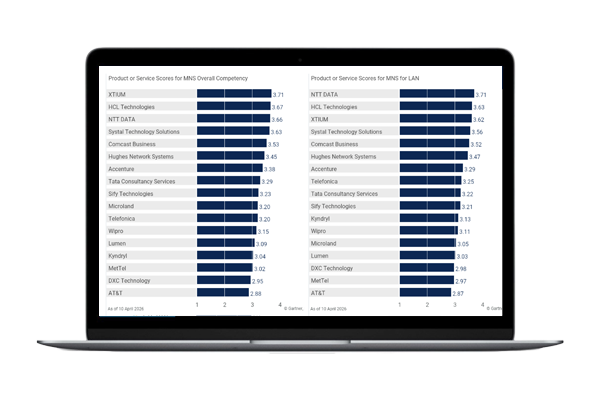
Table 3 shows the product/service scores for each use case. The scores, which aregenerated by multiplying the use-case weightings by the product/service ratings,summarize how well the critical capabilities are met for each use case.
Product/Service Scores in Use Cases
| Use Cases | Accenture | AT&T | Comcast Business | DXC | HCL | Hughes | Kyndryl | Lumen | Mertel | Microland | NTT Data | Sify | Systal | Tata | Telephonica | Wipro | XTIUM |
|---|---|---|---|---|---|---|---|---|---|---|---|---|---|---|---|---|---|
| MNS Overall Competency | 3.38 | 2.88 | 3.53 | 2.95 | 3.67 | 3.45 | 3.04 | 3.09 | 3.02 | 3.20 | 3.66 | 3.23 | 3.63 | 3.29 | 3.20 | 3.15 | 3.71 |
| MNS for LAN | 3.29 | 2.87 | 3.52 | 2.98 | 3.63 | 3.47 | 3.13 | 3.03 | 2.97 | 3.05 | 3.71 | 3.21 | 3.56 | 3.22 | 3.25 | 3.11 | 3.62 |
| MNS for WAN | 3.44 | 2.90 | 3.49 | 2.30 | 3.66 | 3.47 | 2.92 | 3.06 | 3.06 | 3.08 | 3.74 | 3.21 | 3.53 | 3.22 | 3.31 | 3.17 | 3.68 |
| MNS Secure Network Access | 3.56 | 2.99 | 3.49 | 2.92 | 3.78 | 3.35 | 3.04 | 3.24 | 3.03 | 3.29 | 3.55 | 3.18 | 3.62 | 3.28 | 3.13 | 3.26 | 3.89 |
| MNS for Automation and AI | 4.18 | 3.28 | 4.01 | 3.21 | 4.20 | 3.86 | 3.44 | 3.57 | 3.17 | 3.50 | 3.87 | 3.40 | 4.30 | 3.56 | 3.43 | 3.39 | 4.63 |
| MNS for Security | 3.69 | 3.06 | 3.54 | 2.95 | 3.87 | 3.36 | 3.09 | 3.34 | 3.05 | 3.38 | 3.65 | 3.19 | 3.71 | 3.32 | 3.12 | 3.31 | 4.04 |
As of 1 April 2026
Source: Gartner (April 2026)
To determine an overall score for each product/service in the use cases, multiply theratings in Table 2 by the weightings shown in Table 1.
Evidence
1 Forecast: Public Cloud Services, Worldwide, 2023-2029, 2Q25 Update, Gartner.
Critical Capabilities Methodology
This methodology requires analysts to identify the critical capabilities for a class of products or services. Each capability is then weighted in terms of its relative importance for specific product or service use cases. Next, products/services are rated in terms of how well they achieve each of the critical capabilities. A score that summarizes how well they meet the critical capabilities for each use case is then calculated for each product/service.
"Critical capabilities" are attributes that differentiate products/services in a class in terms of their quality and performance. Gartner recommends that users consider the set of critical capabilities as some of the most important criteria for acquisition decisions.
In defining the product/service category for evaluation, the analyst first identifies the leading uses for the products/services in this market. What needs are end-users looking to fulfill, when considering products/services in this market? Use cases should match common client deployment scenarios. These distinct client scenarios define the Use Cases.
The analyst then identifies the critical capabilities. These capabilities are generalized groups of features commonly required by this class of products/services. Each capability is assigned a level of importance in fulfilling that particular need; some sets of features are more important than others, depending on the use case being evaluated.
Each vendor’s product or service is evaluated in terms of how well it delivers each capability, on a five-point scale. These ratings are displayed side-by-side for all vendors, allowing easy comparisons between the different sets of features.
Ratings and summary scores range from 1.0 to 5.0:
1 = Poor or Absent: most or all defined requirements for a capability are not achieved
2 = Fair: some requirements are not achieved
3 = Good: meets requirements
4 = Excellent: meets or exceeds some requirements
5 = Outstanding: significantly exceeds requirements
To determine an overall score for each product in the use cases, the product ratings are multiplied by the weightings to come up with the product score in use cases.
The critical capabilities Gartner has selected do not represent all capabilities for any product; therefore, may not represent those most important for a specific use situation or business objective. Clients should use a critical capabilities analysis as one of several sources of input about a product before making a product/service decision.
Some documents may not be available without a current Gartner subscription.
The 2030 Data Infrastructure Playbook: Strategies for Managing Exponential Data Growth
The State of the IBM Mainframe in 2026
Top Trends in Enterprise Networking for 2026
Beyond Sovereignty: When Geopatriation Clashes With Data Survivability
Recommended by Authors
Some documents may not be available without a current Gartner subscription.
How Products and Services Are Evaluated in Gartner Critical Capabilities
Magic Quadrant for Managed Network Services
Case Study: Align Connectivity, Managed Network Security Services
Industry-recognized and certified to support your IT needs
Trusted by 1,700+ mid-size and enterprise companies, we operate as an extension of your team—solving problems with urgency and accountability so you can focus on strategy, not firefighting. We are not just another MSP. We're your force multiplier that bring proven frameworks and real-world experience to help you secure, scale and streamline operations with fewer resources. Stop juggling vendors. Stop fighting uphill battles. Work with an IT partner who gets IT.