 The AI-Native MSP That Takes You From Strategy to Production Outcomes.

2026 Gartner® Magic Quadrant™ Report for Desktop as a Service
DaaS is broadly deployed, generally to only a minority of an organization’s employees, often replacing VDI. Deployments are increasingly focusing on high security, compliance and sovereignty. DaaS is beginning to be used to host AI workloads, including AI agents.
Download the Full Report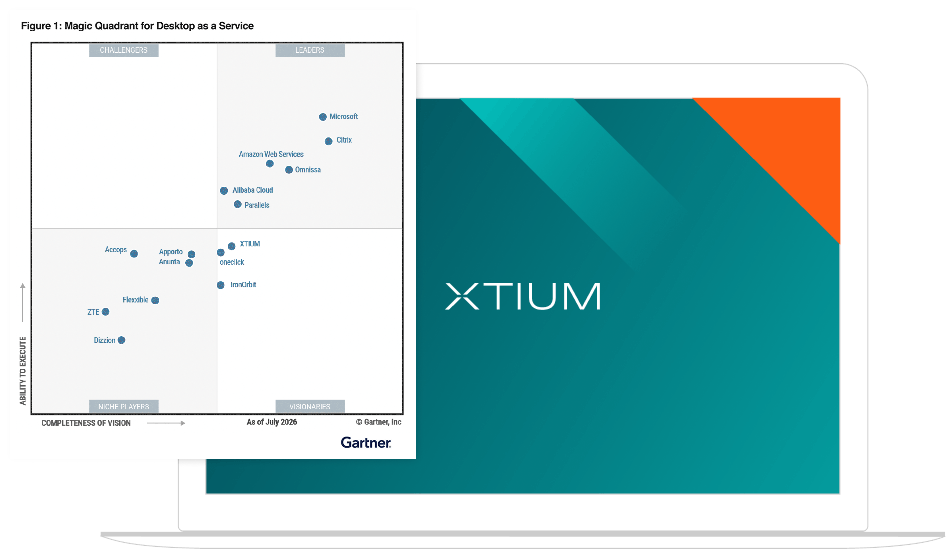

By 2030, 20% of desktop as a service (DaaS) workspaces will be for AI agents, not people, to perform work, up from almost zero in 2026.
Market Definition/Description
Gartner defines desktop as a service (DaaS) as the provision of virtual desktops by public cloud or other service providers. DaaS delivers desktop or application end-user experiences from virtual machines (VMs) accessed through a remote display protocol. DaaS vendors incorporate a fully managed control plane into their offerings to facilitate user connections and provide a management interface. DaaS may be delivered as a preconfigured service or as a platform, with pricing based on subscription or usage. DaaS is charged through subscription- or usage-based pricing models.
DaaS solutions enable remote workers, offshore workers, third-party employees, contractors, frontline workers, office workers and AI agents to access cloud-hosted virtual desktops. DaaS solutions include capabilities for centralized VM management. DaaS virtual desktops can be configured for a variety of use cases, including contact center workers, process workers, information workers, and workers who require high-performance computing or rich graphics.

Mandatory Features

Common Features
Mandatory Features
Mandatory features in this market include:
- Providing a vendor‑managed cloud control plane hosted by a public cloud or other service provider to perform DaaS operations and broker connections to VMs.
- Supporting secure remote desktop protocols to enable access to virtual desktops or applications.
- Enabling connectivity from a range of endpoints, including those running Windows, macOS or Linux.
- Providing centralized management of virtual desktop resources, including users and assignments.
- Monitoring virtual desktop and application usage, virtual machine performance and user experience.
Common Features
Common features in this market include:
- Orchestrate persistent and nonpersistent compute and storage resources for Windows 11 desktop experiences or comparable experiences on Windows Server OS running single-session or multisession VMs.
- Provide centralized management of VM images, including image updates and life cycle management.
- Offer vendor‑provided compute and storage resources as part of the service.
- Support application hosting, including published application delivery models.
- Optimize real‑time audio and video performance for unified communications solutions, including Microsoft Teams, Cisco Webex, Zoom and WebRTC‑based solutions.
- Monitor remote network connections for performance issues such as latency, packet loss and jitter.
- Manage user profiles across sessions and devices.
- Support application layering and masking to simplify application management.
- Integrate or extend the client network into the DaaS environment.
- Support multicloud and hybrid deployment options.
- Integrate with IT service management (ITSM) tools and configuration management databases (CMDBs).
- Integrate with digital employee experience (DEX) or digital experience monitoring (DEM) tools.
- Support access from web browsers and nontraditional endpoint operating systems, including iOS, Android, Chrome OS, IGEL OS, eLux OS, Dell ThinOS and Stratodesk NoTouch OS.
Vendor Strengths and Cautions
XTIUM
XTIUM is a Visionary in this Magic Quadrant. Its XTIUM DaaS platform products are broadly focused on fully managed, outcome-based desktop delivery with integrated compliance and automation. It provides vendor-managed DaaS, offering a more defined architecture with increased services. Its operations are geographically diversified with a strong presence in North America, and its clients tend to be midsize to large enterprises. XTIUM is investing in automation and compliance capabilities. It is incorporating AI-driven operations to deliver predictive insights and proactive issue resolution.
Strengths
- Offering (product) strategy: XTIUM’s product strategy combines best-of-breed technologies with its own management platform and deep service integration, unlike typical DaaS vendors that offer a minimal services layer. Organizations leverage these turnkey, advanced services to rapidly modernize their digital workspaces with minimal operational friction.
- Product or service: XTIUM enables clients to utilize complex workloads and native compliance dashboards without requiring deep internal technical expertise for implementation. Buyers should assess the architectural components in their design and XTIUM’s services to properly evaluate XTIUM during procurement.
- Market responsiveness/record: XTIUM demonstrates excellent market alignment by accurately anticipating the shift toward AI-native autonomous operations and hybrid work demands. IT leaders should embrace this visionary approach to seamlessly integrate nonhuman agentic workloads into their enterprise infrastructure.
Cautions
- Sales execution: Despite achieving strong growth in both revenue and user adoption, XTIUM is rarely identified as a top-three competitor by other vendors in this Magic Quadrant. Clients will need to fill the awareness gap by proactively assessing XTIUM’s capabilities for services-rich DaaS requirements.
- Geographic strategy: Although XTIUM offers multiregion hosting capabilities, its current customer base is predominantly in North America and Europe. Organizations operating outside these regions should carefully assess their specific regional requirements before selecting the vendor.
- Operations: XTIUM’s scalability was significantly enhanced in 2025 following its merger with Evolve IP. However, its growth potential remains constrained by its relatively small organizational size, continued regional focus on North America and Europe, and the capabilities of its ecosystem partners.
Accops
Accops is a Niche Player in this Magic Quadrant. Its Accops Managed Desktops, JioPC for Enterprise and Accops for AVD products broadly focus on secure digital workspace delivery for regulated, security-sensitive environments. It offers self-assembled, vendor-assembled and vendor-managed DaaS, with a strong focus on zero trust and Azure Virtual Desktop integration. Its operations are mostly focused in Asia and the Middle East, serving midsize and large organizations in government, financial services and education. Accops is investing in tighter Azure integration, expanded cloud control planes, enhanced zero trust, and AI-driven monitoring and automation.
Strengths
- Operations: Accops delivers a tightly integrated DaaS and security stack optimized for regulated environments to enforce consistent enterprise policies. IT leaders should leverage this focused architecture to reduce operational complexity when deploying secure workspaces.
- Market responsiveness/record: Accops consistently aligns its roadmap with evolving client needs, for example the HyLabs product for education and enterprise IT labs. Customers and buyers should assess Accops’ applicability to their industry vertical to maximize the benefit their products could offer.
- Customer experience: Accops provides a secure, predictable user experience with a strong emphasis on access control and reliability. Regional enterprise buyers should take advantage of its localized support to ensure stable, policy-driven operations.
Cautions
- Innovation: Accops shows slower expansion into advanced, AI-driven operations and autonomous remediation compared to larger providers. This narrower focus may limit differentiation for organizations pursuing emerging analytics-led use cases.
- Sales execution/pricing: Accops provides multiple deployment, licensing and packaging models, including managed DaaS, control-plane-only and white-label offerings. While this flexibility can appeal to buyers, organizations should carefully assess commercial terms, including services and infrastructure dependencies to accurately compare total cost against more standardized DaaS offerings.
- Geographic strategy: Accops maintains a highly concentrated operational presence, with 90% of customers located in Asia and the Middle East. Its limited North American and European footprint may constrain adoption for global enterprises requiring consistent multiregional support.
Alibaba Cloud
Alibaba Cloud is a Leader in this Magic Quadrant. Its Elastic Desktop Service product broadly focuses on cloud-native DaaS with integrated orchestration and virtual desktop life cycle management. It offers self-assembled, vendor-assembled and vendor-managed DaaS, with a strong focus on AI-native capabilities, including operations and intelligent workload optimization. Its operations are geographically diversified with strength in China (region) and Asia/Pacific, serving clients ranging from small and midsize businesses (SMBs) to large enterprises. Alibaba Cloud is investing in AI-driven automation, GPU-enabled workloads and expansion of global infrastructure.
Strengths
- Operations: Alibaba Cloud delivers highly scalable, cloud-native DaaS through a tightly integrated platform combining infrastructure, control plane and life cycle management. Enterprises should utilize this unified architecture to ensure consistent performance for high-density, enterprisewide deployments.
- Overall viability: Alibaba Cloud benefits from the financial strength, significant scale, infrastructure depth and continued investment capacity of Alibaba Group. Buyers and clients should factor this hyperscaler stability into their long-term platform strategies.
- Product or service: The vendor executes a cohesive product strategy emphasizing AI-driven operations, GPU-enabled workloads and seamless ecosystem integration. IT leaders should explore these managed automation capabilities to simplify complex orchestration requirements.
Cautions
- Market responsiveness/record: Alibaba Cloud’s DaaS messaging faces hurdles resonating with buyers outside its established core markets. To increase confidence, buyers in Western markets should assess geopolitical concerns and speak with client references within their target regions.
- Geographic strategy: While expanding, Alibaba Cloud’s physical enterprise footprint remains uneven compared to other hyperscalers, with operations highly concentrated in China and parts of Asia. Buyers should assess the consistency of service delivery and support by region.
- Innovation: Alibaba Cloud’s application integrations prioritize the domestic Chinese market, such as DingTalk and WeCom. Applications widely adopted in North America and Europe often require additional configuration or indirect approaches, such as Microsoft Teams lacking native support for Elastic Desktop Service or the lack of a native API for ServiceNow.
Amazon Web Services
Amazon Web Services (AWS) is a Leader in this Magic Quadrant. Its Amazon WorkSpaces product broadly focuses on scalable, cloud-native desktops and application streaming. AWS launched Amazon WorkSpaces for AI agents, signaling a shift from exclusively human users. It offers self-assembled and vendor-assembled DaaS, with a strong focus on AI-enabled operations for monitoring, scaling and user experience optimization. Its operations are geographically diversified, serving clients ranging from SMBs to large enterprises. AWS is investing in automation, ecosystem integration, cost optimization and virtual desktops for AI agent use.
Strengths
- infrastructure, which supports infrastructure as code (including Terraform and Ansible integrations) to enable consistent performance and resilience. Organizations should leverage this tightly integrated platform to achieve rapid provisioning and operational efficiency at scale.
- Geographic strategy: AWS maintains one of the broadest global cloud footprints, allowing organizations to deploy DaaS workloads close to users and meet data residency requirements. Its extensive regional presence supports multinational enterprises seeking consistent service delivery across geographies.
- Overall viability: AWS benefits from substantial financial resources, sustained investment capacity and a broad ecosystem, reinforcing confidence in its long-term ability to support and evolve DaaS offerings for human and AI workloads. Client roadmaps should take advantage of its continued innovation, global expansion and platform.
Cautions
- Customer experience: AWS has designed a configurable offering that requires customers to assemble, integrate and manage multiple services to deliver a complete DaaS solution, which can increase complexity. This places greater emphasis on customer or broadly available partner expertise/professional services to achieve a consistent end-user experience.
- Sales execution/pricing: AWS relies heavily on a partner-led and self-service sales model, which can create variability in how DaaS solutions are positioned, assembled and delivered to customers. Organizations may experience inconsistent delivery quality and should carefully evaluate suppliers and structure contracts to minimize delivery risk.
- Market understanding: AWS offers a broad and technically complex set of DaaS capabilities, which is not ideal for business buyers prioritizing simplicity and ease of use. Its product positioning makes it challenging for business-focused stakeholders to clearly assess end-user experience and productivity outcomes.
Anunta
Anunta is a Niche Player in this Magic Quadrant. Its Anunta Enterprise DaaS and Packaged DaaS products broadly focus on hybrid and multicloud DaaS. It offers vendor-assembled and vendor-managed DaaS, with a strong focus on managed service integration, a defined architecture and increased services. Its operations are primarily focused in North America and India, serving large enterprises in regulated sectors. Anunta is investing in automation, digital employee experience (DEX) analytics, hybrid cloud optimization, AI-driven operational insights and autonomous remediation capabilities.
Strengths
- Product or service: Anunta delivers a comprehensive offering combining platform capabilities with managed services to support complex hybrid and multicloud environments. IT leaders should utilize this service-led approach to guarantee consistent operational outcomes while reducing internal administrative overhead.
- Offering (product) strategy: Anunta executes a strategy centered on integrated managed DaaS that combines orchestration, life cycle management and operational services. Enterprises should leverage this multicloud flexibility to maximize control and scalability across their digital workspaces.
- Market responsiveness/record: The vendor demonstrates strong responsiveness to enterprise demand for managed DaaS and workspace modernization support. Regulated global organizations should partner with Anunta to successfully navigate large-scale, complex infrastructure transformations.
Cautions
- Sales execution/pricing: Anunta employs a service-led sales model that often requires extensive customization and engagement during the sales cycle. Prospects should anticipate extended evaluation timelines and variability in how complex enterprise solutions are scoped and priced.
- Geographic strategy: Anunta maintains a concentrated operational presence, relying heavily on partners to extend its global reach beyond key regions. This dependency may limit the consistency of delivery and support for multinational organizations.
- Customer experience: Anunta delivers a managed experience that relies heavily on close collaboration between the vendor and the customer. Organizations must ensure clear alignment of expectations to prevent variability in implementation quality and operational outcomes.
Apporto
Apporto is a Niche Player in this Magic Quadrant. Its Digital Workspaces and Virtual Computer Lab products broadly focus on a cloud-hosted control plane and cloud or on-premises workloads. It offers self-assembled, vendor-assembled and vendor-managed DaaS, with a strong focus on AI-based security analytics and operational automation. Its operations are primarily focused in North America, serving education and midmarket organizations. Apporto is investing in zero-trust security and orchestration improvements.
Strengths
- Market responsiveness/record: Apporto demonstrates responsiveness to evolving enterprise requirements through a flexible platform supporting public cloud, hybrid and on-premises deployments. Midmarket organizations should leverage this flexibility to simplify their desktop delivery without sacrificing security.
- Sales execution/pricing: Apporto delivers a straightforward, managed consumption model that significantly simplifies adoption for organizations with limited end-user computing resources. Buyers should utilize these packaged services to reduce deployment complexity and accelerate their time to value.
- Product or service: Apporto provides a cloud-native offering with a hosted control plane, broad endpoint support and integrated zero-trust security. Organizations seeking a fully managed experience should assess the platform’s ability to streamline their overall workspace operations.
Cautions
- Operations: Apporto relies on a comparatively smaller operational scale and support organization than larger providers in this market. Organizations with highly distributed global deployments should carefully validate the vendor’s operational processes and support capabilities.
- Geographic strategy: Apporto maintains its strongest market presence in North America, with a more limited international footprint. This regional concentration limits its appeal among multinational enterprises seeking globally standardized DaaS delivery and support models.
- Offering (product) strategy: Apporto focuses strictly on core workspace delivery, offering less breadth than competitors with expansive digital workplace portfolios. Organizations seeking tightly integrated ecosystem capabilities spanning DEX, endpoint management and AI-driven operations should carefully assess Apporto’s capabilities and vision.
Citrix
Citrix is a Leader in this Magic Quadrant. Its Citrix DaaS and Citrix DaaS Flex offerings broadly focus on secure application and desktop delivery across hybrid and multicloud environments. Citrix DaaS is self-assembled and DaaS Flex is vendor-assembled DaaS, with a strong focus on a defined architecture and a choice of services. Its operations are geographically diversified, serving large enterprises in regulated industries. Citrix is investing in sovereign cloud, managed services, automation and expanded AI capabilities for performance management, security and user experience optimization.
Strengths
- Market responsiveness/record: Citrix successfully evolves its mature virtualization portfolio to address hybrid cloud, sovereign deployments and persona-based consumption models like DaaS Flex. Enterprises should leverage these flexible consumption options to closely align their DaaS spending with actual business usage.
- Product or service: Citrix differentiates through a unified management framework that supports on-premises, hybrid and cloud-based deployments, enabling organizations to adapt infrastructure strategies without substantially altering operational processes. I&O leaders can leverage Citrix’s broad workspace, desktop, application and observability capabilities to support diverse workforce requirements while maintaining deployment flexibility and operational consistency.
- Offering (product) strategy: Citrix provides deployment flexibility across self-assembled and vendor-assembled DaaS while maintaining a unified management console. Organizations commonly exploit its management console for noncore capabilities such as analytics and automation.
Cautions
- Sales execution/pricing: Citrix customers must select the licensing approach, including named-user, concurrent-user or persona-based consumption models, that best aligns with their requirements. Organizations evaluating multiple deployment, management and service options should invest time in assessing the most appropriate licensing and consumption approach to align operational requirements and long-term cost expectations.
- Customer experience: Realizing the full value of the Citrix platform can require specialized skills and ongoing administrative expertise, particularly in complex or highly customized environments. Some Gartner clients report that contract renewals and licensing modifications can require additional negotiation effort, especially when organizational requirements or consumption patterns evolve.
- Sales strategy: Citrix primarily focuses its direct sales efforts on expanding platform adoption within existing customers, while much of its new-customer acquisition is driven through partners. Customers adopting additional platform capabilities should carefully assess them, as expanded consumption may affect future renewal costs.
Dizzion
Dizzion is a Niche Player in this Magic Quadrant. Its Dizzion DaaS product broadly focuses on secure application and desktop delivery across hybrid and multicloud environments. It offers self-assembled and vendor-assembled DaaS, with a strong focus on a defined architecture and a choice of services. Its operations are geographically diversified, serving midsize enterprises in a broad range of industries.
Dizzion declined requests for supplemental information. Gartner’s analysis is therefore based on other credible sources.
Strengths
- Product or service: Dizzion’s proprietary, cloud-native Frame platform enables hybrid and multicloud deployments and tiered managed services across a broad range of public and private clouds. Clients should utilize this flexible architecture to seamlessly integrate public cloud resources with their existing on-premises infrastructure.
- Sales strategy: Dizzion positions its hybrid and multicloud sales strategy around simplifying IT operations with both predictable and flexible consumption-based pricing options. Buyers should leverage these varied commercial models to best align their DaaS procurement with enterprise budgeting preferences.
- Operations: Dizzion maintains global availability alongside a dedicated European Union-based service specifically designed to support strict data residency requirements. Multinational enterprises should employ these localized operations to guarantee compliance and prioritize DEX.
Cautions
- Innovation: Dizzion’s product development and major release cadence have slowed notably in 2026 as it refocuses on its Omnissa partnership for brokering technology and makes core architectural changes. Buyers and clients should engage directly with Dizzion for clarity on new releases.
- Overall viability: Dizzion has changed direction, shifted to a channel-focused go-to-market strategy and updated its leadership structure in early 2026. While these transitions were planned, their success is yet to be determined. Prospective buyers and clients should assess the risk of these changes by engaging with Dizzion.
- Market responsiveness/record: The vendor has gaps in its generative AI and agentic capabilities compared to market leaders. Furthermore, the vendor is rarely mentioned in client RFIs, reflecting a limited competitive presence in current enterprise evaluations.
Flexxible
Flexxible is a Niche Player in this Magic Quadrant. Its FlexxDesktop product is mainly focused on broker-agnostic DaaS management across Microsoft, Citrix and other platforms with strong automation. It provides vendor-assembled DaaS and offers additional services. Its operations are primarily focused in Europe, and its clients tend to be managed service providers and large enterprises. Flexxible is investing in EU sovereignty and cross-platform orchestration. It is integrating AI to enhance cost optimization, automation and policy management.
Strengths
- Product or service: Flexxible delivers a differentiated orchestration platform enabling organizations to optimize heterogeneous environments across multiple technologies like Microsoft and Citrix. IT leaders should utilize this broker-agnostic approach to simplify the management of complex, multivendor end-user computing estates.
- Offering (product) strategy: Flexxible executes a strategy centered on unified workspace management, automation and governance rather than delivering a stand-alone hosting platform. Enterprises pursuing hybrid and multicloud strategies should assess this platform to achieve comprehensive cross-platform orchestration.
- Market responsiveness/record: Flexxible continuously demonstrates strong responsiveness to enterprise demands for greater operational visibility and control. Clients should take advantage of its ongoing investments in platform interoperability to preserve their freedom to choose hosting vendors.
Cautions
- Geographic strategy: Flexxible maintains its strongest market presence in Europe, with limited visibility and customer penetration in North America and Asia/Pacific. Organizations seeking a broadly established global provider will encounter a much narrower geographic footprint than larger competitors.
- Innovation: Flexxible focuses its innovation primarily on management and orchestration rather than broader workspace platform advancements. Buyers should assess how important innovative features like AI are, as the vendor invests less in AI-native operations and agent automation than Leaders in this Magic Quadrant.
- Operations: Flexxible relies significantly on integration with third-party brokers, workspace platforms and ecosystems, introducing dependencies outside its direct control. Customers must coordinate roadmaps across multiple vendors to achieve desired outcomes.
IronOrbit
IronOrbit is a Visionary in this Magic Quadrant. Its INFINITY Workspaces product is broadly focused on enabling all use cases, with specific skills related to GPU capabilities and unified operations. It provides vendor-managed DaaS and offers additional services. Its operations are primarily focused in North America, and its clients tend to be midsize and large enterprises with performance-intensive workloads. IronOrbit is investing in GPU-based services and DEX capabilities. It is adopting AI-assisted operations for proactive monitoring and workload optimization.
Strengths
- Product or service: IronOrbit delivers a fully managed offering that combines virtual desktops, GPU-accelerated options and operational services into a single solution. Organizations seeking to reduce operational complexity should utilize this turnkey approach to achieve guaranteed performance outcomes.
- Offering (product) strategy: IronOrbit executes a strategy centered on integrating infrastructure, operations and support capabilities with emerging AI-assisted proactive monitoring. IT leaders should adopt this integrated model to streamline workspace delivery and enhance their DEX.
- Market understanding: IronOrbit demonstrates a deep understanding of midsize and large enterprises seeking service-led alternatives to self-assembled platforms. Buyers with performance-intensive use cases should leverage the vendor’s focus on compliance and operational support to accelerate deployment.
Cautions
- Operations: IronOrbit operates at a smaller scale than many prominent providers, which may limit its capacity to support highly distributed global deployments. Multinational organizations should carefully validate the vendor’s operational capacity and support coverage before committing.
- Customer experience: IronOrbit delivers its customer experience primarily through a managed service model, making outcomes heavily dependent on service engagement quality. Organizations seeking extensive self-service capabilities will find fewer options than those offered by platform-centric providers.
- Sales execution/pricing: IronOrbit utilizes a consultative, service-led sales approach that complicates direct comparisons against standardized services from larger competitors. Buyers often require additional evaluation cycles to untangle the relationship between managed services, platform capabilities, and overall costs.
Microsoft
Microsoft is a Leader in this Magic Quadrant. Its Azure Virtual Desktop and Windows 365 products are broadly focused on delivering customizable cloud DaaS at global scale. Azure Virtual Desktop is for human use, with Windows 365 for both human and AI-agent use. Microsoft provides self-assembled and vendor-assembled DaaS, offering a wide range of deployment models. Its operations are geographically diversified, and its clients span SMBs to large enterprises. Microsoft is investing in ecosystem integration and automation, and it is advancing AI-powered desktop experiences integrated with Microsoft 365 and Azure.
Strengths
- Market understanding: Microsoft demonstrates clear understanding of enterprise digital workplace requirements through its comprehensive Windows 365 and Azure Virtual Desktop offerings. Organizations should leverage these dual solutions to address diverse use cases from simplified Cloud PCs to customized hybrid deployments.
- Overall viability: Microsoft benefits from immense scale, a massive ecosystem, and sustained investment across cloud, productivity and AI technologies. IT leaders should capitalize on this deep integration with Microsoft 365, Intune, Agent 365 and Azure to ensure robust, future-proof platform evolution.
- Geographic strategy: Microsoft leverages its significant global cloud footprint and extensive partner network to facilitate DaaS delivery across all key geographies. IT leaders should capitalize on this unparalleled regional availability to ensure a uniform and policy-driven workspace environment for distributed international users.
Cautions
- Sales execution/pricing: Microsoft blends consumption-based, reservation-based and user-based licensing, which can result in complex billing and navigating multiple licenses. Organizations must engage in significant planning to optimize licensing and control spending across different DaaS scenarios.
- Offering (product) strategy: Microsoft offers both SaaS and platform as a service
(PaaS) solutions in Windows 365 and Azure Virtual Desktop, respectively. Gartner would refer to Windows 365 as vendor-assembled DaaS and Azure Virtual Desktop as self-assembled DaaS. Organizations must invest additional effort to determine the most appropriate platform and validate future roadmaps for their specific needs. - Customer experience: Some Gartner clients report Azure Virtual Desktop capacity issues that result in an inability to scale virtual desktops, usually at the start of the working day. This is specific to pay-as-you-go virtual machines in key Azure regions. Prospective clients must work with Microsoft to ensure they select the right Azure Virtual Desktop configurations, which may cost more, to overcome capacity constraints. Windows 365 is not impacted because Microsoft natively manages capacity.
Omnissa
Omnissa is a Leader in this Magic Quadrant. Its Omnissa Horizon Cloud product is broadly focused on unified DaaS across hybrid and multicloud environments with centralized control. It provides self-assembled, vendor-assembled and vendor-managed DaaS using a defined architecture with additional services available from the vendor. Its operations are geographically diversified, and its clients tend to be large enterprises. Omnissa is also investing in DEX and endpoint management capabilities.
Strengths
- Product or service: Omnissa delivers a mature platform supporting hybrid and multicloud deployments through a unified management experience with broad endpoint support. Buyers adopt Omnissa to integrate automation, endpoint management and robust DEX monitoring.
- Market understanding: Omnissa demonstrates a clear understanding of enterprise requirements for managing distributed workforces across complex hybrid environments. Organizations exploit its intense focus on automation and operational visibility to improve end-user experiences and reduce IT overhead.
- Market responsiveness/record: Omnissa’s investments in Horizon Cloud and autonomous workspace capabilities directly reflect shifting enterprise priorities regarding operational efficiency. IT leaders leverage these AI-integrated capabilities to simplify operations, optimize infrastructure costs and increase platform autonomy.
Cautions
- Customer experience: Omnissa offers extensive functionality and deployment flexibility, which inherently increases complexity for customers evaluating multiple operating models. Organizations seeking a highly prescriptive or turnkey experience require additional planning and internal, vendor or partner expertise to achieve desired outcomes.
- Sales execution/pricing: Omnissa delivers a broad platform with multiple bundles that complicate ROI analysis alongside its DaaS-focused offerings. Buyers must carefully assess the distinct value of bundled automation and DEX capabilities in higher bundle tiers alongside their core desktop or application delivery requirements.
- Overall viability: Omnissa is less successful with brand and DaaS offering recognition compared to other Leaders. Buyers should challenge Omnissa to prove the return on investment for its capabilities, particularly if they are comparing them against hyperscale cloud providers with broader platform ecosystems.
oneclick
oneclick is a Visionary in this Magic Quadrant. Its oneclick Digital Workspace Platform is broadly focused on secure, sovereign DaaS with strong EU data residency capabilities. It provides vendor-managed DaaS, offering a defined architecture with additional services available from the vendor. Its operations are primarily in Europe, and its clients tend to be regulated industries and public sector organizations. oneclick is investing in sovereign cloud and Kubernetes-based delivery. It is integrating AI-driven automation to enhance compliance and operational efficiency.
Strengths
- Geographic strategy: oneclick establishes a highly differentiated position through an uncompromising focus on European sovereign cloud, software and AI requirements. European public sector and regulated enterprises utilize this end-to-end sovereignty to confidently navigate stringent data residency mandates.
- Market responsiveness/record: oneclick has been responsive to the surging demand for EU sovereign digital workplace services and compliance automation. Organizations facing strict regulatory demands leverage the vendor’s specialized investments to ensure continuous, localized compliance.
- Sales execution/pricing: oneclick leverages a streamlined marketplace-oriented go-to-market model that significantly simplifies procurement and accelerates cloud adoption. Buyers evaluating regulatory-driven DaaS initiatives should take advantage of this clear framework to expedite their enterprise deployments.
Cautions
- Customer experience: oneclick targets a highly specific set of sovereignty use cases that may not be suitable for organizations requiring global DaaS standardization. Enterprise buyers must carefully evaluate how well the platform aligns with long-term workspace transformation goals beyond strict regulatory compliance.
- Innovation: oneclick focuses its innovation on compliance automation and AI capabilities designed exclusively to operate within EU sovereignty boundaries. This focus strengthens regional differentiation but limits visibility among global organizations prioritizing broader ecosystem integrations.
- Offering (product) strategy: oneclick centers its strategy narrowly on sovereign DaaS, limiting its appeal for organizations seeking an expansive end-user computing platform. Buyers outside the core EU region should assess whether oneclick can meet their requirements.
Parallels
Parallels is a Leader in this Magic Quadrant. Its Parallels DaaS and Parallels Remote Application Server (RAS) products are broadly focused on flexible desktop and application delivery across hybrid environments. It provides self-assembled and vendor-assembled DaaS with optional services from the vendor. Parallels’ operations are geographically diversified through its channel ecosystem, and its clients range from SMBs to large enterprises. Parallels continues to invest in cost optimization and hybrid support. It is leveraging AI to improve operations, session performance, automation and resource efficiency.
Strengths
- Sales execution/pricing: Parallels successfully capitalizes on the market need for simplified licensing and streamlined administration while extending its reach through a strategic channel ecosystem. Organizations utilize this transparent commercial approach to easily align their DaaS investments with predictable business outcomes.
- Overall viability: Parallels demonstrates sustained growth in its active customer base and year-over-year revenue, bolstered by its strategic organizational focus on DaaS offerings. IT buyers should rely on this dedicated corporate trajectory to confidently support their long-term digital workspace investments. Customer experience:
- Customer sentiment toward Parallels remains highly positive due to its direct 24/7 support and tailored success plans. Enterprise leaders should actively participate in its expert communities and advisory boards to directly influence their ongoing product enhancements.
Cautions
- Operations: Parallels’ expansion is constrained by a relatively smaller organizational size, fewer compliance certifications and lower market visibility compared to hyperscale competitors. Prospects and clients should assess geographic concentration in Western markets and heavy reliance on partners as these may limit its ability to capture massive, multinational enterprise deployments.
- Market understanding: Parallels delivers a robust feature suite but lags competitors in adopting advanced capabilities for AI-driven optimizations and agentic workloads. Organizations with complex enterprise environments should assess Parallels’ competitiveness where intelligent workload orchestration is increasingly critical.
- Geographic strategy: While Parallels provides global support, its operational focus and compliance certifications remain heavily concentrated in Europe and North America. Global enterprises must carefully assess Parallels’ limited regulatory capabilities in relation to operations located outside these core regional markets.
ZTE
ZTE is a Niche Player in this Magic Quadrant. Its ZTE Cloud Desktop products are broadly focused on large-scale, cloud-hosted desktop delivery with significant infrastructure integration for automation. It provides vendor-assembled and vendor-managed DaaS, offering a more defined architecture with increased services. Its operations are focused in China (region) and Thailand, and its clients tend to be telcos, large enterprises and public sector organizations. ZTE is investing in scalability and orchestration. It is introducing AI-driven scheduling and resource optimization at scale.
Strengths
- Operations: ZTE demonstrates massive operational scale by supporting deployments of up to 5 million active users. Large-scale enterprises in its core regions utilize this robust engineering capacity for large-scale, high-density workforces.
- Overall viability: ZTE exhibits robust organizational viability, underscored by dominant regional market share, sustained revenue growth and a large portfolio of core patents. Buyers should capitalize on this proven stability and strategic AI emphasis to confidently anchor their long-term workspace strategies.
- Market responsiveness/record: ZTE successfully aligns with evolving customer needs through the introduction of AI-driven workload scheduling and resource optimization at scale. Organizations leverage these advanced features to maximize high availability, data backup and stringent regional compliance.
Cautions
- Customer experience: ZTE does not have case studies publicly available for cloud PC and finding information on this service outside China (region) and Thailand is difficult. Buyers should ensure they validate the specific services ZTE provides to ensure successful, consistent enterprise implementations.
- Geographic strategy: ZTE’s operational footprint is restricted to China (region) and Thailand. Its strategy on geographical expansion means it has limited coverage compared to Leaders in this Magic Quadrant. Global organizations operating outside these specific regions should ensure ZTE can meet their requirements.
- Product or service: ZTE is consumer-focused with its offering and endpoint design, which constrains the broader enterprise applicability of its services. Buyers should ensure ZTE meets their functional requirements, as the vendor’s offerings currently trail market leaders regarding flexible third-party integrations and advanced generative AI capabilities.
Vendors Added & Dropped
We review and adjust our inclusion criteria for Magic Quadrants as markets change. As a result of these adjustments, the mix of vendors in any Magic Quadrant may change over time. A vendor's appearance in a Magic Quadrant one year and not the next does not necessarily indicate that we have changed our opinion of that vendor. It may be a reflection of a change in the market and, therefore, changed evaluation criteria, or of a change of focus by that vendor.
Added
No vendors were added to this Magic Quadrant.
Dropped
HP Inc. (HP Anyware)
Inclusion & Exclusion Criteria
The inclusion criteria have changed from 2025, when vendors could qualify with 150,000 CPU-enabled virtual desktops. This number increased to 200,000 for 2026. In 2025, the inclusion criteria required 30,000 virtual machines under management, which increased to 40,000 in 2026. Gartner expects these criteria to rise in future years.
To qualify, vendors met the following criteria:
Market participation: Must sell desktop as a service (DaaS) aligning to the market definition.
Market traction: DaaS offering must meet the following criteria:
- Vendor has been active in the virtual desktop infrastructure, server-based computing or desktop as a service market(s) before 1 May 2025 (i.e., at least 12 months tenure).
- DaaS offering(s) and capabilities assessed have been generally available on or before 5 June 2026.
- Vendor must have 200,000 monthly active users of their DaaS offerings on 5 June 2026.
- Vendor must have 40,000 virtual machines under management on 5 June 2026.
- The user and virtual machine volumes must relate to use by organizations; consumer use does not count for inclusion.
- Gartner must have evidence of client inquiry mentioning the vendor’s DaaS offerings.
Regions: DaaS must be available in at least two regions. The regions considered in this Magic Quadrant are:
- North America
- For the scope of this research, we defined North America as the U.S., Canada and Mexico.
- Europe
- For the scope of this research, we defined Europe as the sum of Western and Eastern Europe.
- Gartner defines Western Europe as including the following countries: Austria, Belgium, Denmark, Finland, France, Germany, Greece, Ireland, Italy, the Netherlands, Norway, Portugal, Spain, Sweden, Switzerland, and the U.K. We define Eastern Europe as including the following countries: Albania, Belarus, Bosnia and Herzegovina, Bulgaria, Czech Republic, Croatia, Estonia, Hungary, Latvia, Lithuania, Macedonia, Moldova, Montenegro, Poland, Romania, Russia, Serbia, Slovakia, Slovenia, Türkiye, and Ukraine.
- Asia (excluding China [Region] but including the Pacific)
- For the scope of this research, we included Australia, New Zealand, Singapore, South Korea, Japan, India, Indonesia, Malaysia, Thailand, Bangladesh, Pakistan, Philippines, Sri Lanka, Vietnam
- China [Region]
- The Chinese mainland
- Hong Kong
- Taiwan
- Latin America
- For the scope of this research, we included Brazil, Chile and Argentina
- Middle East and Africa
Support services: Must be available in each of the regions that the vendor operates within for coverage during daytime working hours (approximately 8:00 a.m. to 5:00 p.m.) in at least one time zone per region.
Technical capabilities relevant to Gartner clients: Features assessed must be generally available on or before 1 May 2026. Vendors offering DaaS can be in any or all the following configurations:
- Self-assembled DaaS: Self-assembled DaaS services are where the client selects a cloud-based virtualization broker and integrates this with a customer-defined infrastructure as a service.
- Vendor-assembled DaaS: Vendor-assembled services incorporate a cloud-based virtualization broker integrated with a cloud infrastructure. The vendor is responsible for orchestration of all infrastructure services upon which the virtual desktops operate.
- Vendor-managed DaaS: Vendor-managed DaaS services are where the vendor provides a virtualization platform, cloud infrastructure and the management of virtual desktops. (Note: While system integrators provide these offerings, their services are not covered here. They are covered by the outsourced managed workplace services Magic Quadrant.)
Vendors must include the following services to qualify:
- A managed control plane for the solution as part of the base license or usage fees.
- Any additional management software required to operate the virtual desktop environment.
- Maintenance, updates and upgrades to all cloud infrastructure and management software required to operate the DaaS platform.
- Unique intellectual property (IP) that is critical to DaaS operations and/or user experience. A vendor that solely integrates and orchestrates other vendors’ platforms or services would not qualify.
- A remote desktop protocol to provide secure access from an external user’s device to the DaaS virtual machines.
Additionally, the desktop experience can include:
-
A hosted Windows or Linux server operating system that allows multiple sessions per server delivering an individual desktop experience to each user.
- A hosted Windows or Linux server operating system that allows a single session per server delivering a desktop experience to users.
- A hosted Windows or Linux desktop client operating system that allows a single session per operating system virtual machine.
- A hosted Windows or Linux desktop client operating system that allows multiple sessions per operating system virtual machine to deliver individual experiences to each user.
- Persistent or nonpersistent virtual machines that are assigned to an individual or within a pool.
Vendors will not qualify if they only provide these services, though these additional services may be provided:
- Hosted Windows or Linux application virtualization where the application remains on the DaaS infrastructure and is accessed via the remote desktop protocol
- Hosted macOS services.
- Unified workspaces.
- Local hypervisors.
- Managed services.
- Endpoint security and posture checking, which may optionally include workspace biometric assessments.
- Additional value-added features from either their own portfolio of products or third-party products.
Honorable Mentions
Gartner tracks more than 30 vendors in the DaaS space. Although this research identifies 15 vendors that have met our inclusion criteria, the exclusion of a vendor does not mean that the vendor and its products lack viability. Described below are several noteworthy vendors that did not meet all of our inclusion criteria, but could be appropriate for clients, contingent on requirements:
-
Cameyo by Google is a virtual application delivery platform owned by Google following its acquisition of Cameyo in 2024. The offering enables organizations to deliver Windows and Linux applications to users through a web browser or as progressive web applications (PWAs), without requiring a full virtual desktop environment. Cameyo is positioned as a complementary technology within the ChromeOS and Chrome Enterprise portfolio, helping organizations modernize endpoint strategies while maintaining access to legacy applications. Its capabilities are focused on simplifying application delivery, centralized management and secure access to business-critical applications across a wide range of endpoints. Cameyo did not meet the inclusion criterion to provide a full virtual desktop experience.
-
Kasm Technologies is a privately held software company that develops Kasm Workspaces, a workspace streaming platform that delivers desktops, applications and browsers directly through a web browser. The platform uses container-based technology to provide secure, isolated workspaces, application streaming, browser isolation and remote access across on-premises, cloud, air-gapped and hybrid environments. Kasm Workspaces supports Windows, Linux and web-based workloads, and is designed to help organizations provide secure remote access, virtual desktops and application delivery without requiring traditional client software or a full virtual desktop infrastructure (VDI) deployment. Its offerings are used across enterprise, government, defense, education and regulated-industry environments. Kasm Technologies did not qualify as Gartner assessed it as not meeting the minimum scale for inclusion.
-
Leostream is a privately held software company headquartered in Massachusetts, U.S., that specializes in remote desktop access and digital workspace management. Its Leostream Remote Desktop Access Platform, including the Leostream Connection Broker, provides organizations with a vendor-neutral way to manage and connect users to virtual desktops, physical workstations and applications across on-premises, public cloud and hybrid environments. The platform supports a broad range of infrastructure providers, operating systems and display protocols, enabling customers to build and manage flexible DaaS, VDI and high-performance workstation environments through a centralized management layer. Leostream did not meet the inclusion criterion for a managed control plane service.
Evaluation Criteria
Ability to Execute
Gartner analysts evaluate vendors on the viability of their DaaS offerings, market effectiveness, overall growth, client retention and reputation.
Product or Service: This criterion looks at the breadth and depth of the vendor’s DaaS offerings and whether its capabilities match what is required by enterprise clients. In the DaaS market, this includes evaluating the provider’s control plane functionality, deployment flexibility (e.g., hybrid vs. cloud-native), supported operating systems, and display protocol performance. It also assesses integration with identity and access management (IAM), endpoint security, and the vendor’s track record of delivering on its roadmap for advanced features like GPU-accelerated desktops and unified communications optimizations.
Overall Viability: This criterion includes an assessment of the organization’s overall financial health, as well as the financial and practical success of the business unit. For DaaS, it considers the likelihood of the organization to continue offering and investing, the organization’s ability to scale, partner scalability, leadership stability, and year-over-year revenue growth. Sales Execution: This criterion looks at the vendor’s capabilities in all presales activities and the structure that supports them. In a DaaS context, this includes deal management, presales technical support for complex cloud migrations, and the overall effectiveness of the sales channel (including managed service providers [MSPs] and system integrators [SIs]). Consideration is given to the clarity and competitiveness of the vendor’s packaging and pricing models, conquest sales and the sustainability of growth.
Market Responsiveness / Record: This criterion looks at a vendor’s ability to respond, change direction, be flexible and achieve competitive success as market dynamics change. For DaaS, this specifically evaluates how well the vendor adapts to evolving hybrid work trends, shifting demands for zero-trust network access (ZTNA), and new hyperscaler capabilities. This criterion also considers tenure in the market, product vision for the future of digital workspaces, value proposition, and the quality of the vendor’s roadmap.
Marketing Execution: This criterion was not rated because brand awareness is currently less of a differentiator for enterprise DaaS buyers compared to core platform functionality and pricing flexibility.
Customer Experience: This criterion covers the products, services, and programs that enable customers to achieve anticipated results. For DaaS, it includes general customer feedback and sentiment (e.g., reviews on Gartner Peer Insights and aggregated feedback from Gartner expert interactions), the availability of customer success services and customer case studies.
Operations: This criterion looks at the ability of the vendor to meet goals and commitments. Factors include the quality of the organizational structure, skills, programs, and systems that enable the organization to efficiently operate and effectively scale. In DaaS, this focuses on the provider’s operational capability to manage and update the underlying virtualization infrastructure, guarantee global availability across different regions, and ensure seamless patching and maintenance without disrupting the end-user experience. It also assesses the size and scalability of the organization, the size and scalability of partners, and the scalability of the platform.
Table 1: Ability to Execute Evaluation Criteria
| Evaluation Criteria | Weighting |
|---|---|
| Product or Service | High |
| Overall Viability | High |
| Sales Execution/Pricing | High |
| Market Responsiveness/Record | Medium |
| Marketing Execution | NotRated |
| Customer Experience | Medium |
| Operations | High |
Source: Gartner (August 2026)
Completeness of Vision
Gartner analysts evaluate vendors on their ability to understand current market opportunities and to create and articulate their vision for future market direction, innovation, customer requirements and competitive forces. Ultimately, vendors are rated on their vision for the future and on how well that maps to Gartner’s position.
Market understanding: This criterion assesses a vendor’s ability to translate buyer needs into products. In the DaaS market, high-vision vendors anticipate market forces like hybrid work, bring your own device (BYOD), zero trust, AI and the RAM memory crisis. They demonstrate leadership by addressing demands for AI-driven scaling and digital experience monitoring. With rising RAM costs and heavy generative AI footprints straining budgets, vendors are rated on mitigating these pressures through automated memory optimization, dynamic resource allocation and flexible pricing that maintains performance while controlling infrastructure costs. Market understanding is assessed by examining unique value to the market, understanding external market forces, and alignment with customer objectives and use cases.
Marketing strategy: This criterion is not rated because DaaS purchasing decisions are currently driven more by technical architectures, hyperscaler alignments and pricing models than by differentiated marketing campaigns or brand messaging.
Sales strategy: This criterion considers whether the vendor has a sound strategy for selling that uses the appropriate networks. In DaaS, this heavily involves leveraging channel resellers, value-added resellers, cloud marketplaces (e.g., AWS, Azure, Google Cloud), MSPs and SIs that extend market reach and technical expertise. Consideration is given to the flexibility of pricing and bundling (such as named vs. concurrent user or consumption-based billing), the effectiveness of the channel and strategic partnerships with major public cloud infrastructure providers.
Offering (Product) strategy: This criterion evaluates whether a vendor’s approach to product development emphasizes market differentiation and future requirements. For DaaS, this means evaluating the vendor’s roadmap for multicloud deployment capabilities, advanced display protocol optimizations and integration with IT service management (ITSM) platforms, AI interfaces, endpoint management tools, DEX tools and other relevant tools. Consideration is given to the vendor’s product roadmap quality and whether it shows a clear, well-defined path for evolution and development. Also assessed is product portfolio breadth and depth to determine if it offers sufficient capabilities to meet client needs.
Business model: This criterion is not rated because DaaS business models have largely standardized around cloud-based subscription and consumption pricing, leaving little room for meaningful strategic differentiation among enterprise-grade vendors.
Vertical industry strategy: This criterion is not rated because DaaS is primarily evaluated as a horizontal technology. While specific compliance and regulatory certifications are needed for verticals like healthcare or finance, the core workspace delivery mechanism remains consistent across all industries.
Innovation: This criterion looks at the layout of resources, expertise or capital for investment and preemptive purposes. In the DaaS space, this considers the strength of the offering roadmap regarding next-generation workspace technologies. This includes using AI and machine learning for predictive infrastructure scaling and DEX, automated image and patch management, continuous authentication for endpoint security and unique protocol enhancements to seamlessly handle unified communications (like Teams or Zoom). Additionally, this assessment includes market-specific investment, the use of newer technologies, such as automation and AI, and whether the vendor shows clear indications in its future outlook toward innovation (product or business model innovation).Geographic Strategy: This criterion looks at the provider’s strategy to direct resources and offerings to meet the specific needs of geographies outside its native region. For DaaS, a critical component is the vendor’s ability to leverage global hyperscaler data center regions to guarantee low-latency connections for end users and ensure data residency/sovereignty compliance for global workforces. Additional consideration is given to the tailoring of go-to-market strategies to address regional cloud adoption maturity and the depth of regional channel partners.
Table 2: Completeness of Vision Evaluation Criteria
| Evaluation Criteria | Weighting |
|---|---|
| Market Understanding | High |
| Marketing Strategy | NotRated |
| Sales Strategy | Medium |
| Offering (Product) Strategy | High |
| Business Model | NotRated |
| Vertical /Industry Strategy | NotRated |
| Innovation | High |
| Geographic Strategy | High |
Source: Gartner (August 2026)
Quadrant Descriptions
Leaders
Leaders exhibit strong execution and vision scores and have proven their success in the market by gaining market share. In the DaaS market, Leaders have successfully shown they can attract clients new to desktop virtualization, as well as those migrating from traditional on-premises VDI solutions to cloud-based alternatives. They address a broad range of enterprise use cases from basic task workers to high-end or AI-driven workloads. Leaders have established scale across multiple global regions. They bring continuous innovation to their offerings, such as advanced automation and predictive resource scaling, and have significant investment in their DaaS capabilities to manage evolving enterprise demands.
Challengers
Challengers exhibit a strong set of technologies, marketing and sales execution, and intellectual property, similar to Leaders, but they tailor their DaaS solutions to specific market segments, regions, or use cases. For example, a Challenger in the DaaS market might possess a highly robust platform but limit its operations primarily to specific geographies or rely heavily on specific telecom or MSP channels. They may be satisfied with serving their current customer base or market, or they may lack the strategic support, broader public cloud integration vision, or desire to compete in the overall enterprise Leaders quadrant.
Visionaries
Visionaries exhibit strong capabilities in their current offerings and a complete set of functionalities to address common use cases. However, the vendor’s size, size of its installed base, platform breadth, or integration points make it appropriate for some, but not all, enterprise buyers. Characteristics of Visionaries in this Magic Quadrant include a broad range of forward-looking DaaS capabilities such as advanced AI-assisted operations, sovereign cloud architectures, or deep DEX monitoring integrations. Visionaries have the opportunity to scale, are applicable to all industry verticals, and have broad global reach, even if their current operational execution or market share lags behind Leaders.
Niche Players
Niche Players exhibit leadership in specific use cases, market segments, regions or verticals. However, their offerings fail to provide a breadth of features that make them relevant to all buyers, regardless of vertical, geographic market, or use case. Characteristics observed in Niche Players for this DaaS Magic Quadrant include a tight focus on compliance-driven environments or a dominant focus on specific regional markets or industry verticals. This quadrant also includes vendors with capabilities that, while available for sale as direct DaaS offerings, are commonly deployed by others to enable white-label DaaS solutions.
Context
As desktop as a service (DaaS) solutions replace traditional on-premises VDI and are increasingly adopted by enterprises for larger, more complex use cases, many buyers are consolidating their end-user computing platforms to support hybrid and multicloud environments. This Magic Quadrant offers an objective comparison of leading products for a broad range of buyers. Since requirements vary, we recommend reviewing the accompanying Critical Capabilities for Desktop as a Service to match your specific needs. Use this research to align your priorities — such as expertise, vision, technology, and cost— with the most suitable vendor, regardless of their quadrant placement.
This Magic Quadrant places emphasis on DaaS providers’ abilities to meet the complex security, compliance, and multiregional needs of global organizations, with a strong focus on data sovereignty. We have assessed vendors located in North America, Europe and Asia (including China). Some vendors sell globally and others regionally. The Magic Quadrant’s evaluations reflect the needs of most of Gartner’s audience for DaaS, which is primarily in North America, Europe and Asia (outside China).
Over the past 12 months, DaaS providers have continued to acquire or develop adjacent technology in order to offer a broader suite of capabilities. Although the core capability of a DaaS solution is to support getting users connected to a virtual desktop via a managed control plane, vendors assessed in this Magic Quadrant scored better if they also had advanced capabilities in critical adjacent areas such as hybrid orchestration, DEX monitoring, and artificial intelligence (AI). Specifically, high-scoring vendors demonstrated a clear vision and capabilities for AI-driven operational automation, intelligent cost optimization, and the underlying infrastructure to host emerging nonhuman AI agent workloads.
Market Overview
The desktop as a service market is moving beyond traditional virtual desktop delivery to incorporate artificial intelligence. What was once a purely infrastructure-focused technology is evolving into a highly intelligent platform driven by intense vendor investments in AI-native capabilities that introduce automation, self-healing environments and autonomous workspace operations. These advancements aim to improve the digital employee experience, with vendors increasingly utilizing predictive analytics and intelligent workload scaling to proactively resolve latency and optimize session performance before a user ever perceives an issue.
DaaS Use by AI Agents
DaaS is no longer strictly for human consumption; platforms are rapidly adapting their architectures to host emerging nonhuman, agentic AI workloads. Even as these platforms grow more sophisticated and autonomous, deployments are maintaining stringent enterprise controls. Vendors are introducing specialized, localized cloud architectures designed to guarantee rigorous compliance, zero-trust security and strict data sovereignty for highly regulated global workforces.
Cost Savings
Traditionally, cost savings when compared with physical PCs was not a driver for DaaS adoption, but this has changed. With cost as an adoption driver, enterprises focus acutely on DaaS vendors’ cost-optimization capabilities. Most vendors offer more basic scaling and power management, while some use AI technology to avoid over- and underspecifying virtual desktop configurations.
Continued DaaS Growth
Gartner forecasts that DaaS spending will grow from $4.9 billion in 2026 to $6.5 billion in 2030, with a compound annual growth rate (CAGR) of 4%. 1 Growth is slowing, but stimulus from AI workloads could increase growth rates. The total cost of ownership for DaaS, especially when users couple it with thin-client endpoints, remains lower than that of a laptop PC for many use cases, though Gartner expects DaaS costs to rise as memory price increases begin to impact hosting charges. Enterprises continue to increase the mix of DaaS within their estates. This expansion is accelerated by the increased cost of PCs, which is driving organizations to extend the life span of existing devices by repurposing those using a secure operating system into DaaS thin clients. However, most are deploying DaaS for specific use cases, such as third-party access, rather than as a complete PC replacement.
Types of DaaS
The DaaS market has three distinct types of offerings, with vendors positioning their products in one or more of the three segments:

Self-assembled DaaS

Vendor-assembled DaaS

Vendor-managed DaaS
Next Steps
Heads of I&O should use our evaluation to understand the performance and strategic vision of DaaS vendors. Then, identify vendors that closely align with your organization’s short-term needs and longer-term strategy. Use the companion Critical Capabilities for Desktop as a Service to determine which products offer the specific capabilities that your organization needs.
Evidence
1 Forecast: Public Cloud Services, Worldwide, 2024-2030, 1Q26
Evaluation Criteria Definitions
Ability to Execute
Product/Service: Core goods and services offered by the vendor for the defined market. This includes current product/service capabilities, quality, feature sets, skills and so on, whether offered natively or through OEM agreements/partnerships as defined in the market definition and detailed in the subcriteria.
Overall Viability: Viability includes an assessment of the overall organization's financial health, the financial and practical success of the business unit, and the likelihood that the individual business unit will continue investing in the product, will continue offering the product and will advance the state of the art within the organization's portfolio of products.
Sales Execution/Pricing: The vendor's capabilities in all presales activities and the structure that supports them. This includes deal management, pricing and negotiation, presales support, and the overall effectiveness of the sales channel.
Market Responsiveness/Record: Ability to respond, change direction, be flexible and achieve competitive success as opportunities develop, competitors act, customer needs evolve and market dynamics change. This criterion also considers the vendor's history of responsiveness.
Marketing Execution: The clarity, quality, creativity and efficacy of programs designed to deliver the organization's message to influence the market, promote the brand and business, increase awareness of the products, and establish a positive identification with the product/brand and organization in the minds of buyers. This "mind share" can be driven by a combination of publicity, promotional initiatives, thought leadership, word of mouth and sales activities.
Customer Experience: Relationships, products and services/programs that enable clients to be successful with the products evaluated. Specifically, this includes the ways customers receive technical support or account support. This can also include ancillary tools, customer support programs (and the quality thereof), availability of user groups, service-level agreements and so on.
Operations: The ability of the organization to meet its goals and commitments. Factors include the quality of the organizational structure, including skills, experiences, programs, systems and other vehicles that enable the organization to operate effectively and efficiently on an ongoing basis.
Completeness of Vision
Market Understanding: Ability of the vendor to understand buyers' wants and needs and to translate those into products and services. Vendors that show the highest degree of vision listen to and understand buyers' wants and needs, and can shape or enhance those with their added vision.
Marketing Strategy: A clear, differentiated set of messages consistently communicated throughout the organization and externalized through the website, advertising, customer programs and positioning statements.
Sales Strategy: The strategy for selling products that uses the appropriate network of direct and indirect sales, marketing, service, and communication affiliates that extend the scope and depth of market reach, skills, expertise, technologies, services and the customer base.
Offering (Product) Strategy: The vendor's approach to product development and delivery that emphasizes differentiation, functionality, methodology and feature sets as they map to current and future requirements.
Business Model: The soundness and logic of the vendor's underlying business proposition.
Vertical/Industry Strategy: The vendor's strategy to direct resources, skills and offerings to meet the specific needs of individual market segments, including vertical markets.
Innovation: Direct, related, complementary and synergistic layouts of resources, expertise or capital for investment, consolidation, defensive or pre-emptive purposes.
Geographic Strategy: The vendor's strategy to direct resources, skills and offerings to meet the specific needs of geographies outside the "home" or native geography, either directly or through partners, channels and subsidiaries as appropriate for that geography and market.
Industry-recognized and certified to support your IT needs
Trusted by 1,700+ mid-size and enterprise companies, we operate as an extension of your team—solving problems with urgency and accountability so you can focus on strategy, not firefighting. We are not just another MSP. We're your force multiplier that bring proven frameworks and real-world experience to help you secure, scale and streamline operations with fewer resources. Stop juggling vendors. Stop fighting uphill battles. Work with an IT partner who gets IT.










.png?width=1122&height=682&name=MSP-501%20Special%20Award%20Winners%20Logo_AI%20MSP%20of%20Year_color%20(1).png)